
Why a condensate line clogs and overflows
When your air conditioner cools air, it pulls moisture out of it. That water drips off the evaporator coil into a drain pan and runs out through a condensate line, usually a PVC pipe about three-quarters of an inch wide. When the line plugs with algae, slime, dust or debris, the water backs up and goes wherever it can.
A running system makes gallons of condensate on a hot day, so a partial clog can turn into an overflow within a few hours of heavy use. The line often runs a long way through an attic or wall with a shallow slope, which gives slime an easy place to settle.
Drain pan, float switch and the path the water takes
The drain pan sits under the coil to catch what the line does not carry away. Many systems also have a float switch, a small safety that shuts the system off when water rises in the pan or line. If a switch was never installed, failed, or was bypassed, nothing stops the unit from running while it overflows.
Attic air handler
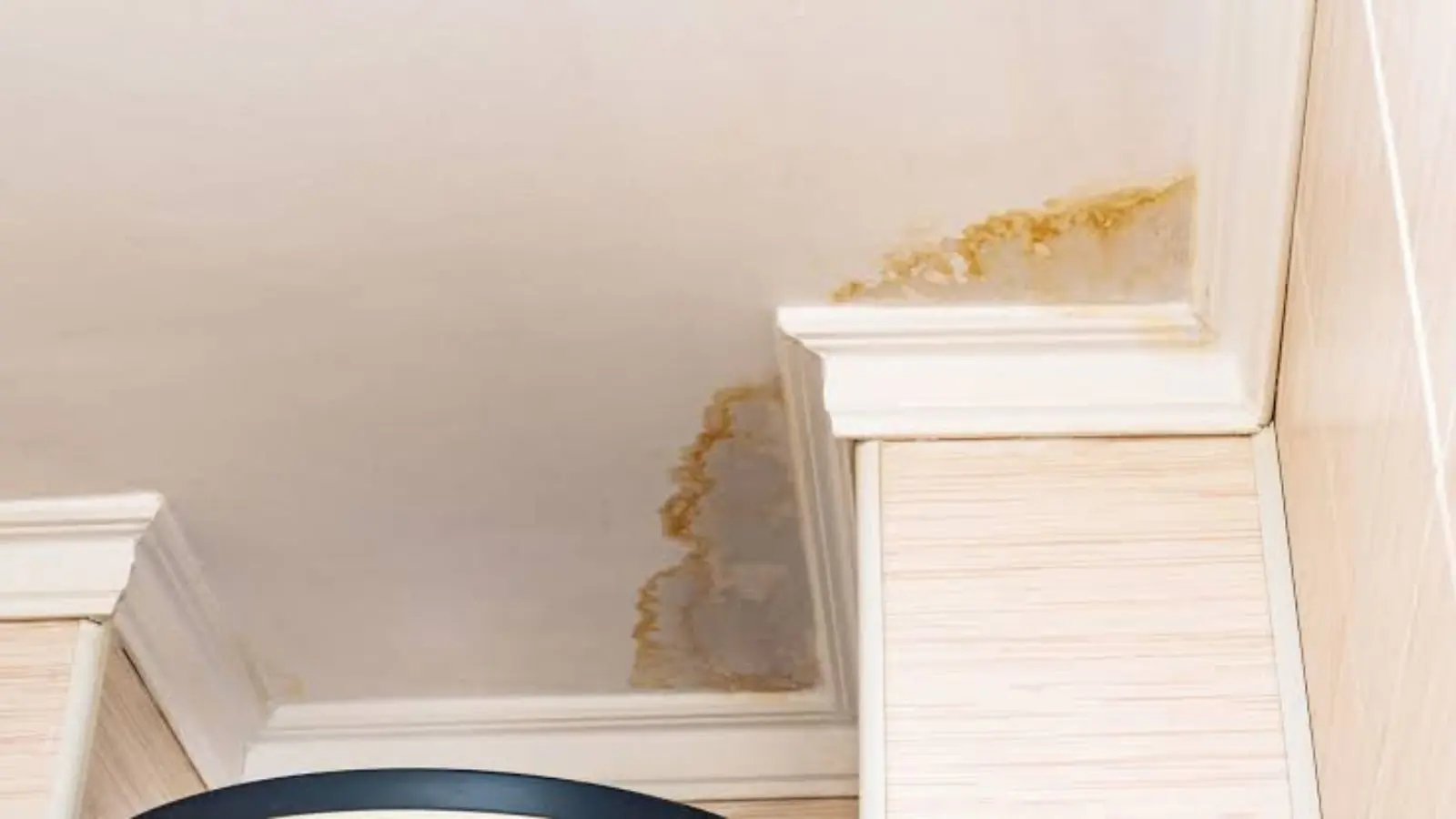
When the handler sits in the attic, overflow lands on the ceiling drywall below. The first sign is often a brown or yellow ring on the ceiling, sometimes with a soft, sagging spot. Insulation above soaks water up and holds it against the drywall for days.
Closet or garage unit
A unit in a hall closet leaks onto the floor and into the bottom of the wall. Water wicks up the drywall and baseboard next door, and the closet floor hides the damage until paint bubbles or a musty smell appears. Our water mitigation page explains how wicked moisture is found and dried.
Water still spreading? The emergency line is open 24 hours a day.
Call (760) 769-1159Signs, likely causes and first actions
| Sign | Likely cause | First action |
|---|---|---|
| Water in the drain pan or on the closet floor | Clogged condensate line | Turn the system off at the thermostat, then clear or call for service |
| Ceiling stain or drip below the attic unit | Overflowing pan or cracked pan | Switch off at thermostat and breaker, catch water, protect belongings |
| System shuts off on its own in summer | Float switch tripped by backup | Do not bypass it, check the pan, call HVAC |
| Damp baseboard or bubbling paint by the closet | Slow overflow wicking into drywall | Dry the area, probe with a moisture meter, find the source |
| Musty smell near the unit with no visible water | Wet insulation or drywall nearby | Open the closet, look behind the unit, have the cavity checked |
| Ice on the coil or lines | Airflow or refrigerant trouble that melts later | Turn off cooling and call HVAC, thaw water can overflow the pan |
What to do the moment it leaks
Turn the system off at the thermostat first so it stops producing water. Then, if the breaker panel is dry and safe to reach, switch the air handler breaker off as well. Place buckets or towels, move furniture and boxes out of the wet zone, and photograph everything before you touch it.
Electrical safety
- Stay out of any water that touches outlets, the air handler, or a panel.
- Turn the system off at the thermostat first, and use its breaker only if the breaker box sits in a dry, easy-to-reach spot.
- For any sparking, buzzing, burning smell or shock risk, call Southern California Edison or 911 before you call a restoration line.
- Never stand on a wet floor to open a ceiling that is holding water. Ceiling drywall can fail suddenly.
If a ceiling bulges with water, poke a small hole at the lowest point from a safe angle with a bucket under it. That relieves the weight and saves the sheet, but only when no light fixture or wiring is in the wet area.
Simple prevention you can do yourself
Look for the condensate line outlet, usually a short pipe near the outdoor wall or a drain. If you see no water dripping while the system runs on a warm day, that may be a warning. Flush the line a few times a year with a cup of distilled vinegar poured into the access tee, following your system manual. A wet and dry vacuum on the outside end can also pull a blockage loose.
Every few months, check the pan for standing water, rust or algae. Test the float switch by lifting it gently with the system off and confirming the unit refuses to start. If your handler has no secondary pan or switch, an HVAC tech can add one, which is a small add-on next to a ceiling rebuild.
Who to call: HVAC tech or restoration crew
Call an HVAC technician for the system itself: clearing a stubborn clog, repairing the pan, replacing a switch, or checking the coil. Call a restoration crew for the water already in your structure: wet insulation, saturated drywall, damp baseboards and flooring. They are two different jobs, and the clock on the second one starts when the water does.
Our crews use moisture meters and thermal imaging to map wet drywall, then set air movers and dehumidifiers to dry what can be saved. Ask any restoration company whether its crews work to ANSI/IICRC S500. Once the structure is dry, our water damage repair page covers rebuilding what could not be saved.
Cathedral City note: months of AC at 107 degrees
The mean July daily high in Cathedral City is about 107.6 F, so air conditioners here run hard for months rather than weeks. That long run time means more condensate, more algae growth in the line, and more chances for a small clog to become a ceiling stain. Tie-back: flush the line and check the pan in late spring, before the heavy season, and again midsummer.
We also serve Palm Desert and Thousand Palms, and homes there run the same long cooling season. A leak found on day one is a towel and a thermostat switch. One found after weeks is a drywall job.
Frequently asked questions
Can I pour bleach in my condensate line?
Many manufacturers advise against it because it can damage the pan, coil or fittings. Distilled white vinegar is the common homeowner choice. Check your manual or ask an HVAC tech first.
How do I know if my float switch works?
With the system off, lift the float or press the test point and try to start cooling. If the unit still runs, the switch is not doing its job and a technician should replace it.
Will my insurance cover water from a condensate overflow?
Sudden overflow is often treated differently from a slow, long-running leak. Check your policy, keep your photos and moisture readings, and ask your insurer.
I am in Cathedral City and my attic unit leaked during a heat wave. How soon should the ceiling be opened?
As soon as it is safe, because wet insulation keeps feeding the drywall. In a long cooling season the attic is hot and humid, which can slow drying, so have the ceiling checked with a moisture meter rather than waiting for the stain to dry.