
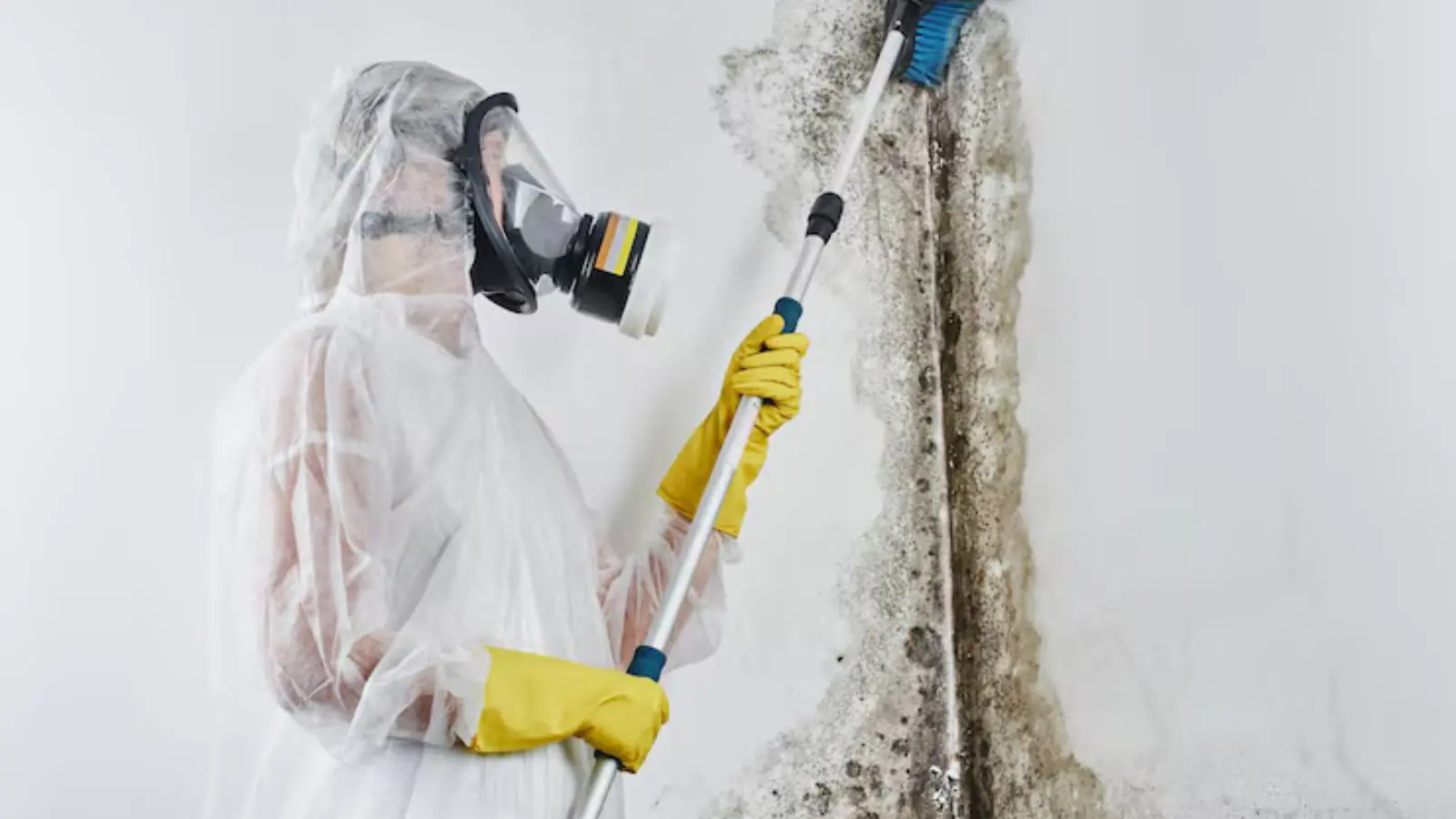
What Mold Remediation Is
Mold remediation is the controlled removal of mold growth and the moisture that fed it, done so spores are not spread to clean rooms of your home. In Cathedral City, nearly every mold call starts with water: a leak, a drain, a roof, an air conditioner. Remediation follows ANSI/IICRC S520 practice, which covers assessment, containment, removal, cleaning and verification, in that order.
Mold needs moisture to grow. Without fixing the water source first, any cleanup is temporary.
A Musty Smell, or Dark Spots in a Closet Wall or Bathroom Ceiling Corner
That smell you cannot trace, or the gray-green or black spotting that keeps coming back on a closet wall or in the corner of a bathroom ceiling, is a moisture problem showing itself. Wiping it with bleach clears the surface and leaves the cause behind. The trade that deals with the growth and the wet material underneath it is mold remediation, and it starts with finding where the water is coming from.
Water still spreading? The emergency line is open 24 hours a day.
Call (760) 769-1159Where Mold Callers Say It Started
The stories vary, but the pattern is steady. Most callers have already seen the water or the stain and waited. These are the situations we hear described most often, paraphrased and general:
- An upstairs toilet seal leaked slowly into the ceiling of the room below, and the paint finally bubbled
- A drip under a bathroom sink soaked the cabinet floor and the back wall behind it
- An AC condensate line clogged and the drain pan overflowed into a hallway ceiling or a utility closet
- A roof leak stained a ceiling after rain, then the insulation above stayed damp
- A closet wall behind stacked boxes or furniture turned dark, with no one looking behind it
In Cathedral City, two local conditions add to those. The mean July high is about 107.6 F, which makes air conditioners run for long stretches, and a clogged condensate line or full drain pan sends water into ceilings and closets. If your system is old, have the line flushed before summer.
Rain from the October 11, 2026 storm topped an inch across most of the valley, and a surface that stayed damp afterward is the setup mold needs. After a storm like that, check ceilings, attic edges and the base of exterior walls for staining you did not have a month ago. A small roof leak that dries out and goes unnoticed is how a closet wall ends up dark by spring.
Mold Removal and Black Mold Cleanup
Black mold is a color and a common name, not a diagnosis. You cannot tell what a growth is by looking at it, and you do not need to, because the removal approach is the same. Any health question belongs to a physician. Our job is the building: find the moisture, contain the growth, remove it and clean the area.
Crews set up containment with plastic sheeting and zippered doors around the affected area. A negative air machine with a HEPA filter pulls air out through filtered exhaust, so the work area stays at lower pressure than the rooms around it. Workers wear respirators and disposable suits and bag waste inside the containment.
Porous materials like drywall, insulation and carpet pad that carry growth are cut out and bagged, not cleaned. Framing and other solid surfaces are HEPA vacuumed, then wire brushed, sanded or wiped as the situation calls for. A final HEPA vacuum and damp wipe finish the area before containment comes down.
Drying equipment often runs during all of this, so moisture readings can fall back to normal before anything is rebuilt. Rebuilding itself falls under water damage repair.
Mold After Water Damage
Materials that stay wet for more than a day or two can grow mold, which is why fast extraction and drying matter so much. Our work on water mitigation is aimed at keeping a wet house from becoming a mold job at all. Moisture meters and thermal imaging find damp spots behind walls that you cannot see.
If your loss was weeks ago, or if drywall was dried but never opened, the assessment looks at what is behind it. Source of moisture first, always. If the leak is still active, remediation waits until it is repaired, otherwise growth returns.
Testing and Independent Clearance
An inspection starts with a visual survey and moisture readings. The assessor looks at the staining, the smell, the building materials and the likely water path, and may use a moisture meter, a thermal camera and sometimes air or surface samples. The result is a written scope of what to remove and what to dry.
Independent clearance testing is a check after the work is done, performed by a third party who does not do the remediation. The tester takes air or surface samples and compares them to baseline samples taken outside or in unaffected rooms. The remediation crew has no stake in the result, which is the point.
Be honest with yourself about what a test shows. Air samples are a snapshot of a moment and a place, and a clear result means conditions at the time of sampling looked acceptable. It does not promise anything about the future. Ask your assessor what they will measure, what baseline they use and how the report reads.
Lenders and buyers sometimes ask for this documentation. No one can promise what any lender will accept, so ask them what they need first.
Mold and Home Sales or Loans
If you are selling, buying or refinancing, a visible mold finding or a disclosure of past water damage can stall things. Sellers often want remediation done and documented before listing, and buyers sometimes ask for the paperwork. Lenders sometimes ask that mold be dealt with before a loan closes.
Keep your records together: the moisture readings, the scope of work, photos before and after, receipts and any clearance report. Ask your agent, your lender or the escrow officer what they want in the file before you spend money, because requirements vary from one deal to the next.
Area, Approach and What Clearance Looks Like
| Area of mold | Likely approach | What clearance looks like |
|---|---|---|
| Small spot on painted wall, dry | Source fix, HEPA vacuum, damp wipe, repaint | Visual check, moisture reading |
| Drywall ceiling below a leak | Containment, cut out wet board, dry cavity | Visual and moisture check, sometimes sampling |
| Under-sink cabinet and wall | Remove cabinet floor, cut wall back, clean framing | Moisture readings, visual check |
| HVAC closet or condensate area | Fix the line, remove wet material, HEPA clean | Visual check, readings, sampling if requested |
| Attic roof deck and insulation | Containment, negative air, remove insulation, HEPA clean | Independent visual and sample report |
What Affects the Cost of Mold Work
Mold prices vary because jobs vary. These are the factors:
- How much area and how many materials the growth has reached
- Whether the moisture source is fixed and the structure is dry
- Containment size and how long negative air machines run
- Drywall, insulation, flooring or cabinets that must be removed
- Testing, if you or a lender want independent clearance
- Rebuild scope after the work
Insurance is a policy question. Whatever caused the water also shapes how your policy treats the mold that follows, so read its mold and gradual damage wording. Ask your insurer, keep a log of calls and letters, and make temporary repairs. Call for your real number after an assessment.
Choosing a Mold Crew
Ask any company if its crews work to ANSI/IICRC S520, and ask if your state licenses mold work. Get the scope and price in writing before work starts, and ask who removes materials and who rebuilds. Be cautious of anyone who promises mold will never come back, because no company can control the moisture in your home once the job is done.
If water is still spreading, emergency water removal comes first. We also serve nearby homes in Rancho Mirage, on the east side of Cathedral City.
Frequently asked questions
Can I clean mold myself with bleach?
Bleach on a surface clears the color but not the moisture or the growth inside porous materials like drywall. For a small spot on a hard, dry surface a careful wipe may be enough. Anything on drywall, insulation or a large area is better assessed first.
How do I know if I need mold testing?
You often do not need it to decide whether to remove visible growth. Testing is mostly useful when a lender, buyer or insurer asks, or when you want independent clearance after remediation.
Does mold remediation include fixing the leak?
The source must be fixed first, usually by a plumber, roofer or HVAC technician. We find and document it. Remediation does not work while the water keeps running.
How long does mold remediation take?
It depends on area, materials and drying time. Small areas can take a day or two. Larger jobs with containment and removal take longer. We explain scope and timing before work starts.
Will the mold come back?
No company can promise that. What you control is moisture: fix leaks quickly, keep condensate lines clear and watch for new stains. Ongoing moisture is what lets mold grow again.