
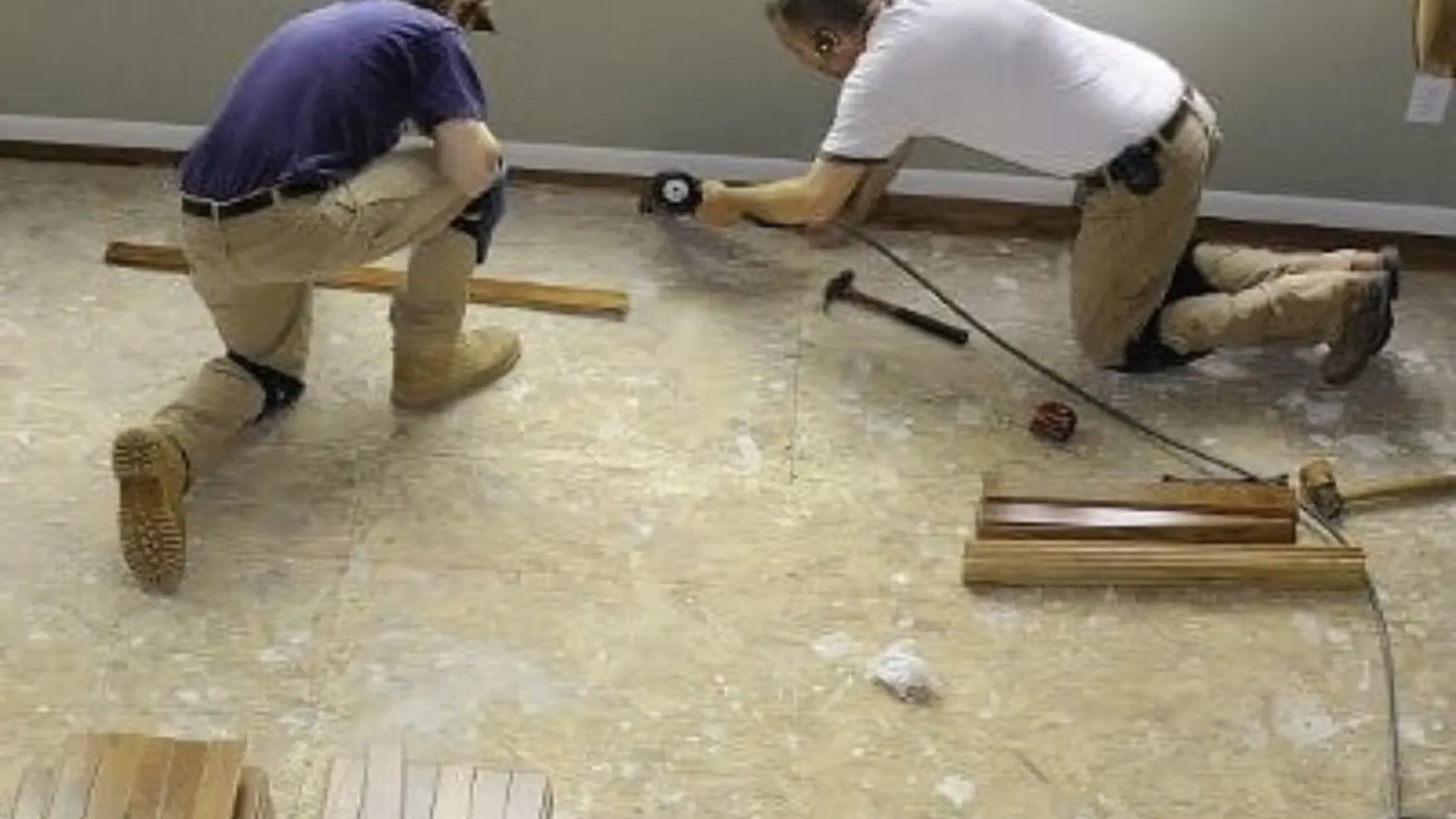
What Water Damage Repair Covers
Water damage repair is the rebuilding stage that starts once your home is dry: replacing drywall, insulation, baseboards, flooring and cabinet parts, then priming and painting to match. In Cathedral City, that work should begin only after moisture readings confirm the structure has dried, because closing up a damp wall hides the next problem. If you still have wet materials or standing water, start with water mitigation and come back here for the rebuild.
The scope depends on what the water touched and how long it sat. A pinhole supply leak that stained one ceiling corner needs a patch and paint. A failed water heater that soaked a hallway can mean drywall cut at two feet, wet insulation pulled, baseboards replaced and a strip of flooring lifted to reach the subfloor.
Repair Waits Until the Structure Is Dry
Debris, soaked carpet pad and ruined materials come out first, during water damage cleanup. Drying equipment then runs until a moisture meter shows framing and subfloor close to the readings from an unaffected room in the same house. Ask for those final readings in writing before any new board goes up.
Drying logs matter twice. They tell the rebuild crew where it is safe to close walls, and they document the loss if you file a claim. A rebuild that skips this step can seal moisture behind fresh paint, and the stain or smell comes back within weeks.
Water still spreading? The emergency line is open 24 hours a day.
Call (760) 769-1159Signs the Damage Has Gone Beyond Cosmetic
A stain you can touch dry is often only a surface problem. These signs usually mean something needs to be cut out and replaced:
- Paint that bubbles, peels or feels soft under a thumb press
- Baseboards that have swollen, split at the joints or pulled away from the wall
- Cabinet toe-kicks and bottom shelves that crumble or have ballooned
- Floorboards with raised edges, or laminate seams that have opened
- A stain that returns after you repaint it
- A musty smell near a wall that looks fine
Any of these on a wall that was wet more than a day or two deserves a moisture reading before you paint.
Ceiling and Wall Water Damage Repair
Not every stain calls for the same repair. A dry, tan ring with a crisp edge usually marks an old leak that has stopped. Once the source is fixed and the area reads dry, it needs stain-blocking primer and paint, not new drywall.
Bubbling paint or a soft, blistered spot means moisture is still in the board or the paper face has failed. Sagging is the serious one. A drooping ceiling is holding water or has lost its grip on the fasteners, so keep people out from under it and let a crew release the water into a bucket through a small relief hole before anything else.
The fix is cutting back to dry, solid material. The crew marks the wet zone with a moisture meter, cuts the drywall to the nearest framing member past the last wet reading, and pulls insulation that is damp or compressed. New board goes in with screws, then tape and thin coats of mud.
Stain-blocking primer goes on before paint, because water stains and tannin bleed through ordinary latex. Matching texture is the part that shows. Knockdown, orange peel and skip trowel each need their own mud thickness and spray pattern, and a patch that is too smooth shows in the raking light from a window.
Hardwood Floor Cupping and Drying
Cupping is when the edges of a board rise higher than its center, forming a shallow trough. It happens because the underside of the plank took on more moisture than the top. Crowning is the reverse, and it often follows if a floor is sanded while still wet.
The floor needs to dry first, usually with drying mats and dehumidifiers over days or weeks, until readings settle. Sanding too early leaves boards that shrink and gap later. Many cupped floors flatten out on their own once dry, and a light sand and refinish finishes the job.
Planks are replaced when they are crushed, split, stained black or delaminated, which is common with engineered flooring whose veneer layer has lifted. Solid wood can often take another sanding, but engineered boards have a thin wear layer that may not survive one.
Repair Scope by Damage Type
This table shows how the scope changes as the damage gets deeper. Your own job may mix several rows.
| Damage type | What gets done | Who and what is involved |
|---|---|---|
| Cosmetic only (dry stain) | Spot prime with stain blocker, repaint wall corner to corner | Painter, no demolition |
| Wet drywall | Cut back past the wet line, replace board, tape, mud, texture, prime, paint | Drywall crew after dry readings |
| Wet insulation | Remove damp batts or blown fill, check the cavity, replace before closing | Mitigation crew removes, rebuild crew replaces |
| Subfloor | Dry with mats, replace crushed or delaminated panels, new underlayment and flooring | Carpenter and flooring installer after drying |
How Desert Heat Changes the Rebuild
Cathedral City's mean July daily high is about 107.6 F. As general trade knowledge, heat like that changes how materials behave. Joint compound can skin over and crack when it dries too fast, paint can flash and show lap marks, and some flooring adhesives set quicker than the label assumes.
Ask your contractor how they will schedule the finish work. Early morning mud and paint, a cooled house and a plan for when each coat goes on are all reasonable things to expect, and they cost you nothing to ask about.
Permits and the Building and Safety Division
The City of Cathedral City Building and Safety Division, at 68700 Avenida Lalo Guerrero, issues building permits, conducts plan reviews and performs inspections. We cannot tell you in advance if your job needs a permit. Ask the city building department before work starts, and ask your contractor how they handle permits and inspections.
A paint-and-patch job may be a different conversation than replacing framing, a water heater or wiring. The answer comes from the city, and it is easier to ask before walls are open than after they are closed.
What Drives the Cost of Repairs
No honest number exists until someone has seen the damage and the dry readings. These factors move the total most:
- The water category and how long materials stayed wet
- How much area was affected, wall by wall and room by room
- Materials: drywall or plaster, carpet or hardwood, stock or custom cabinets
- How many drying days and what equipment ran beforehand
- Rebuild scope, including framing, electrical or plumbing that has to be touched
Insurers often treat a burst pipe and a slow drip very differently, so read what your policy says about gradual damage. Check your policy and ask your insurer. California's residential claims guide advises you to keep a log of calls, save every letter, make temporary repairs, and be wary of early offers that require a release. Call for your real number once the scope is walked through.
Rebuilding After Floods and Larger Losses
Storm or groundwater losses add contaminated materials and more demolition before any rebuild, which is covered under flood damage restoration. Repairs there often wait on insurance and city questions, so ask early about both. We also serve neighbors next door, including Palm Springs, where the same sequence of drying, then rebuilding, applies.
Frequently asked questions
How long after the leak is fixed can repairs start?
Repairs can start once moisture readings in framing and subfloor match the dry reference readings from an unaffected room. That can be a few days or more than a week, depending on materials and how wet they got. Your crew should show you the readings.
Do I need a permit to repair water-damaged drywall in Cathedral City?
We cannot answer that for the city. Ask the Building and Safety Division at 68700 Avenida Lalo Guerrero if your specific repair needs a permit, especially if framing, wiring or plumbing is involved.
Can I just paint over a water stain?
Only if the area is dry, the leak is fixed and you use a stain-blocking primer first. Ordinary paint lets the stain bleed through. If the paint bubbles or the spot feels soft, the board needs to be cut out instead.
Will my cupped hardwood floor go flat again?
Often it does once the boards dry fully, which can take weeks. A light sand and refinish comes after, not before. Planks that are crushed, split or delaminated are replaced.
Can one company handle both the drying and the rebuild?
Ask when you call. Scope and price are explained before work starts, and the drying logs from the first phase become the starting point for the rebuild.