
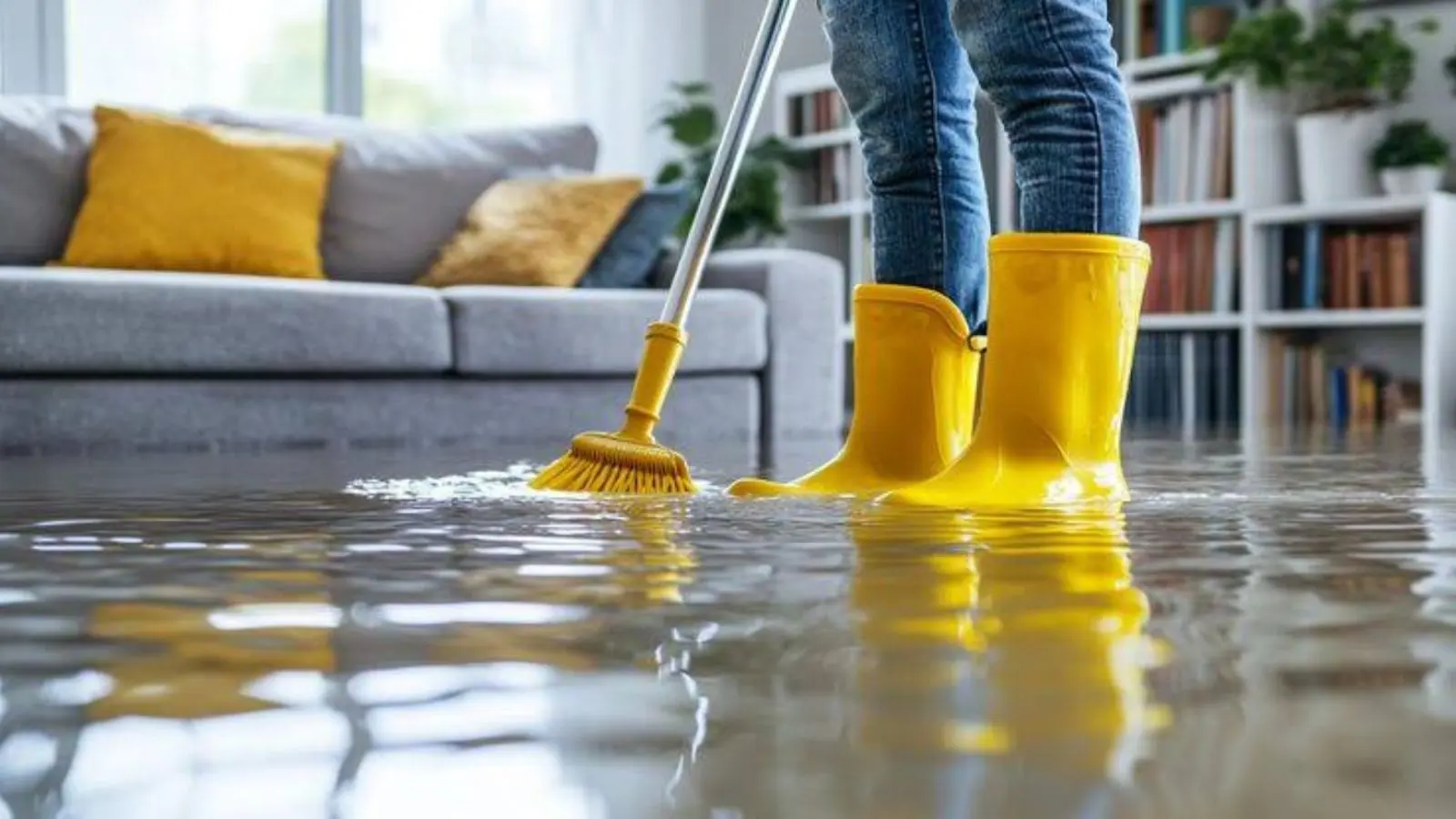
Mud, debris and dirty water inside your house
Water damage cleanup is the removal of water, mud, debris and contaminated materials, followed by sanitizing and deodorizing once the source is stopped. The first 48 hours are the emergency window in Cathedral City, and our 24/7 line is open for it. We send crews same-day when available, including nights and weekends.
While you wait, close the main water valve if a pipe is the source, lift valuables and photos onto dry furniture, and keep children, pets and yourself out of dirty water. Turn off breakers for wet areas only from a dry, easy-to-reach panel.
Safety with contaminated water
- Stay out of any water that touches outlets, cords or the panel. Call Southern California Edison, The Gas Company if you smell gas, or 911 before you call a restoration line.
- Treat floodwater, toilet overflow and sewage as unsafe to touch. Wear rubber boots, gloves and eye protection if you must enter.
- Do not run a household vacuum on wet floors or mud.
- Throw away food that touched the water, and keep children and pets out until the area is cleaned.
Water still spreading? The emergency line is open 24 hours a day.
Call (760) 769-1159What floodwater mud carries into your house
After the remnants of Tropical Storm Rachel on October 11, 2026, city crews were still clearing mud on Tortuga and Santoro, and Varner Road was temporarily closed for mud removal. News crews also reported knee-deep water in the Panorama area while workers cleared drains. If mud like that reached your door, it came from streets and washes, not from a clean pipe.
Mud from runoff can carry soil, oil from pavement, fertilizer and, in some cases, sewage. It also packs into carpet fibers, drywall paper and insulation, where rinsing cannot reach it. That is why porous materials that sat in it come out rather than being washed, while hard surfaces are scrubbed and treated.
Shovel loose mud out while it is still wet, since dried mud turns to dust and sticks to everything. Then call us before you pull carpet by hand, so the removal can be photographed first.
The first 48 hours of cleanup
The sequence is steady. Standing water and slurry come out first, then debris and ruined contents, then wet pad, drywall and insulation that cannot be saved. Surfaces left behind are cleaned, treated and then handed to the drying crew. Early work on the water itself is described on our water mitigation page.
Contents: dry it, clean it or let it go
Can be dried
Solid wood furniture, books you can fan open, rugs from clean water, and many hard plastics.
Can be cleaned
Glass, metal, ceramic, sealed stone and tile, and some fabrics when the water was clean or gray.
Usually goes
Mattresses, upholstered sofas, particleboard, carpet pad and anything soaked in sewage or mud.
Photograph every item before it leaves the house, and keep a list with rough ages. Ask your adjuster before throwing out anything high in value. Photos and the list are the proof your insurer will want.
Materials removal: drywall, insulation and carpet pad
Wet drywall is cut out in a flood cut, a straight horizontal line above the highest wicking mark, often a foot or two over the waterline. Insulation behind it is bagged and removed, since fiberglass and cellulose hold water against the framing. Carpet pad is lifted, rolled and hauled out, and the subfloor underneath is wiped, treated and dried before anything new goes down.
Debris is bagged or hauled, and we tell you before work starts what is being disposed of and what is being kept for the claim file.
Keep or remove, by water category
| Material | Clean water | Gray or black water |
|---|---|---|
| Drywall | Dry if caught early | Remove |
| Insulation | Remove if soaked | Remove |
| Carpet pad | Often remove | Remove |
| Carpet | Clean and dry | Remove |
| Framing and subfloor | Dry in place | Clean, treat, dry |
| Hardwood floor | Dry with mats | Remove, then judge |
The table is a starting point, not a verdict. Moisture readings and what the water actually carried decide each call.
Antimicrobial treatment and deodorizing
Once debris is out and surfaces are cleaned, an antimicrobial is applied to framing, subfloors and hard surfaces that stayed in place. Odors are chased to their source, which usually means removing the material producing it, then running HEPA air filtration while the structure dries. Perfumes and sprays cover smells. They do not remove them.
If the water sat long enough that mold becomes a worry, ask for an assessment as a separate step. After cleanup and drying, the rebuild belongs to water damage repair.
Disposal and documentation for your insurer
Before anything is bagged, we photograph the room, the waterline and each material removed. You keep copies, and so does the file. The California Department of Insurance advises keeping a log of calls and correspondence and making temporary repairs to prevent further damage, and cleanup counts as that kind of repair.
Ask your insurer how it treats a sudden pipe failure versus a slow leak, and if you carry separate flood coverage. Check your policy and be wary of early offers that call themselves full settlements.
What drives the cost of cleanup
- Water category and how much mud or debris came in
- Square footage and number of rooms affected
- Volume of contents and materials to haul away
- Drying days and equipment if drying is also needed
- Rebuild scope afterward
Call for your real number. Scope and price are explained before work starts.
Cleanup for storm water across the city
Storm cleanup is covered in more depth on our flood damage restoration page. Neighbors in Thousand Palms, where Varner Road sits, are reached from the same emergency line, and our Thousand Palms page lists the routes. The office address is 68625 Perez Rd in Cathedral City.
Frequently asked questions
Do you handle water damage cleanup emergencies at night or on weekends in Cathedral City?
Yes. Cleanup calls are answered around the clock, and a crew comes the same day when one is free. No arrival time is promised, though you will get instructions for the wait.
Can I clean up flood mud myself?
You can shovel loose mud out of the way while wearing boots, gloves and eye protection. Carpet, pad, drywall and insulation that sat in it should come out, and the walls and floors need treatment afterward.
Why does porous material have to be removed?
Carpet pad, drywall and insulation soak up water and whatever it carried. Rinsing cannot reach the inside, so the contamination stays and can drive odors.
What does the antimicrobial treatment do?
It is applied to cleaned surfaces that stay in place, such as framing and subfloor. It reduces microbial growth on those surfaces, and it works after the soil and debris are removed.
What photos does my insurer want?
Wide shots of each room, close-ups of the waterline, and each material before removal. A list of damaged contents helps too. Your adjuster can tell you what else they need.