
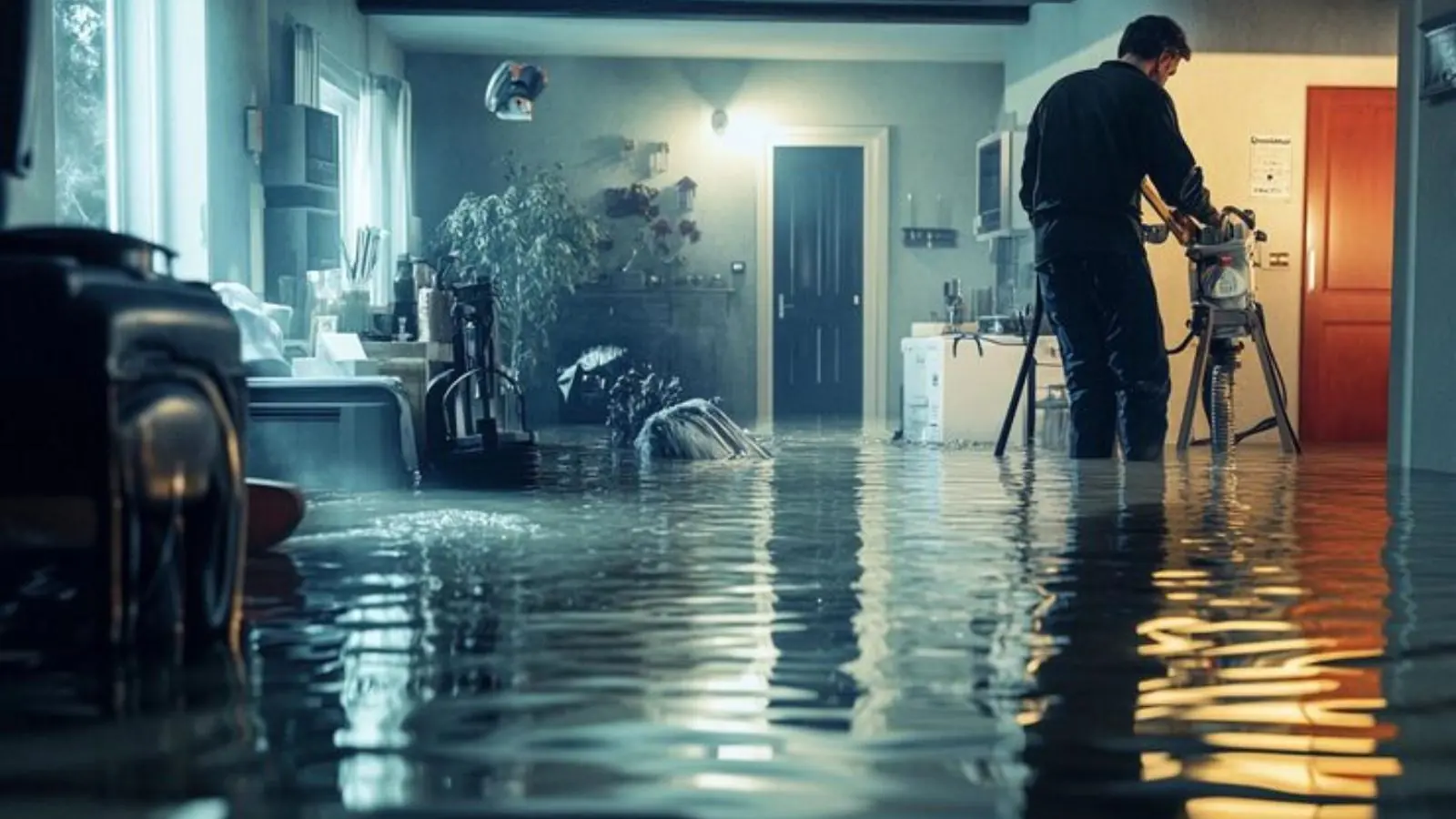
Water is spreading through your home right now
Water mitigation is the work that stops a water loss from growing. That means closing the source, pulling out standing water and starting controlled drying before moisture climbs into your walls and subfloor. Our 24/7 emergency line is open for Cathedral City, and we send crews same-day when available.
While you wait, shut the main water valve, lift valuables and rugs off wet floors, and keep people and pets out of any water that may be dirty. Breakers for soaked rooms can be switched off, provided the panel itself is in a dry spot. If water touches outlets or the panel, stay out and call Southern California Edison or 911 before you call us.
A wet wall or soaked carpet means mitigation has to start now
A wall that feels cool and damp, or carpet that squishes underfoot, is already past the point where towels and a box fan will save it. Moisture climbs into drywall paper, insulation and tack strips faster than it looks. Closing that gap is what professional water mitigation does: measured extraction, targeted drying and a written record of every reading.
Water still spreading? The emergency line is open 24 hours a day.
Call (760) 769-1159Where mitigation calls come from in Cathedral City
Tropical Storm Rachel's remnants arrived on October 11, 2026 and left more than an inch of rain across most of the valley, with standing water closing several city roads. Water pooled at door thresholds can wick into baseboards overnight. If your drains ran slow that night, ask for a moisture meter check along exterior walls, and see flood damage restoration if rainwater came inside.
Summer brings a different source. With the mean July high near 107.6 F, air conditioners run for hours, and a clogged condensate line or overflowing drain pan can soak a ceiling or closet wall for days before a stain shows. Look for a drip at the air handler, turn the system off at the thermostat, and tell us which room sits below it.
Signs the damage is still spreading
- Baseboards that swell, lift or show a dark line along the bottom edge
- Paint that bubbles, or drywall seams that ghost through the finish
- A musty smell in a closet or behind a couch
- Carpet that still feels damp hours after the visible water is gone
- Sticky indoor air even though the AC is running
None of these needs to look dramatic. A thermal imaging camera shows cooler wet areas behind a surface, and a moisture meter puts a number on them, so we scan well past the stain you can see.
What happens on the first visit
The crew confirms the source is off and checks for electrical risk. When there is standing water, emergency water removal comes first, using portable or truck-mounted extraction. Wet carpet pad is lifted so the subfloor can breathe, then the loss is mapped room by room with meter readings and thermal images.
Ask any company whether its crews work to ANSI/IICRC S500, the standard for water damage restoration. A solid answer comes with a written plan, a list of what stays and what goes, and scope and price explained before work starts. We are licensed and insured.
Structural Drying
Structural drying starts once the bulk water is out. Air movers push dry air across walls, floors and cabinet toe-kicks, while LGR dehumidifiers pull moisture out of the air far faster than a household unit. A closed-up house with the AC off holds humidity close to a wet wall, so doors, vents and equipment are arranged as one drying system.
Each day a technician returns, takes moisture readings at the same marked points and enters them in a drying log. Equipment is moved, added or pulled based on those numbers, not on a calendar. A wall counts as dry when it matches a dry reference reading for that material, not when it feels dry to your hand.
Some materials are removed rather than dried. Wet insulation, saturated pad and drywall that swelled or sat in dirty water usually come out, because they hold moisture and feed odors. Hardwood and engineered floors can often be saved with drying mats if caught early, and the drying log doubles as paperwork for your insurer.
Water categories: what they mean and what we do
| Category | What it means | What is done |
|---|---|---|
| 1, clean | Supply line, faucet or tank water at the source | Extract, dry in place, read daily |
| 2, gray | Washer, dishwasher or sump overflow, or clean water that sat | Extract, clean, remove pad and soft goods |
| 3, black | Sewage, rising floodwater, mud and debris | Contain, remove porous materials, disinfect, dry |
Clean water does not stay clean. After a day or two inside a wall cavity, category 1 water can slide toward category 2, which is why same-day calls matter. The heavier removal and sanitizing for categories 2 and 3 falls under water damage cleanup.
If the leak is on the utility side of the meter
Not every wet yard is your problem. If water is bubbling up between the meter and the street, that pipe belongs to the utility, and closing your own main valve will not stop it. Cathedral City does not run its own water utility. Its utility page lists Desert Water Agency for properties west and south of Whitewater Wash and Coachella Valley Water District for properties east and north.
Check your bill to see which agency serves you, and call it about the meter side. Once the water reaching your house is stopped, we handle everything inside. Desert Water Agency has an office in Palm Springs, so our Palm Springs coverage page is a useful read if you live near that edge.
Dry in place or tear out: the honest trade-offs
Drying in place keeps your walls and floors and shortens the rebuild, but it only works when the water is clean or recently gray and the call came early. Tear-out opens the structure faster and removes guesswork, but it adds work afterward. We dry what can be dried, remove what the readings say cannot be, and explain each call first. Rebuilding is covered under water damage repair.
What drives the cost of mitigation
- Water category and how long it sat
- Area affected and number of rooms
- Materials involved, such as carpet, hardwood, drywall and insulation
- Drying days and how many air movers and dehumidifiers are needed
- Rebuild scope once the structure is dry
Coverage for a sudden pipe or appliance failure is often different from coverage for a slow leak, and flood normally sits outside a standard policy, so ask your insurer before assuming. Report the loss to your agent, keep a log of calls, and take reasonable steps such as shutting off the water. Be wary of early offers that call themselves full settlements. Call for your real number once someone has looked at the loss.
Calling from anywhere in Cathedral City
Calls go to a dispatcher around the clock, and the office itself is at 68625 Perez Rd, Cathedral City, CA 92234. Tell the dispatcher which entrance is dry and if your street had standing water, as Ramon Road and Dinah Shore Drive did on October 11, 2026. That tells the crew where to park and which door to carry equipment through.
Frequently asked questions
Do you handle water mitigation emergencies at night or on weekends in Cathedral City?
Yes. Dispatch never closes, holidays included, and a mitigation crew can come the same day when one is free. A fixed arrival time is not promised, but the first call covers what to do until the crew reaches you.
How soon does mitigation need to start?
The first 24 to 72 hours matter most. Drywall and insulation wick water upward, and wet pad and subfloor begin to hold odors quickly. The sooner extraction and drying start, the more material can be kept.
What is the difference between mitigation and repair?
Mitigation stops the damage and dries the structure. Repair rebuilds what had to be removed, such as drywall, flooring and paint. Doing them in that order means you rebuild on dry framing.
Will you cut out my drywall and carpet?
Only when the readings or the water category call for it. Clean-water carpet can often be dried, while pad and anything touched by category 3 water usually goes. You hear the reason before any cutting starts.
What do the daily moisture readings show?
They show whether each wall, floor and framing member is trending toward its dry reference number. The drying log records them, tells the crew when to move equipment, and gives your insurer a clear record of the work.