
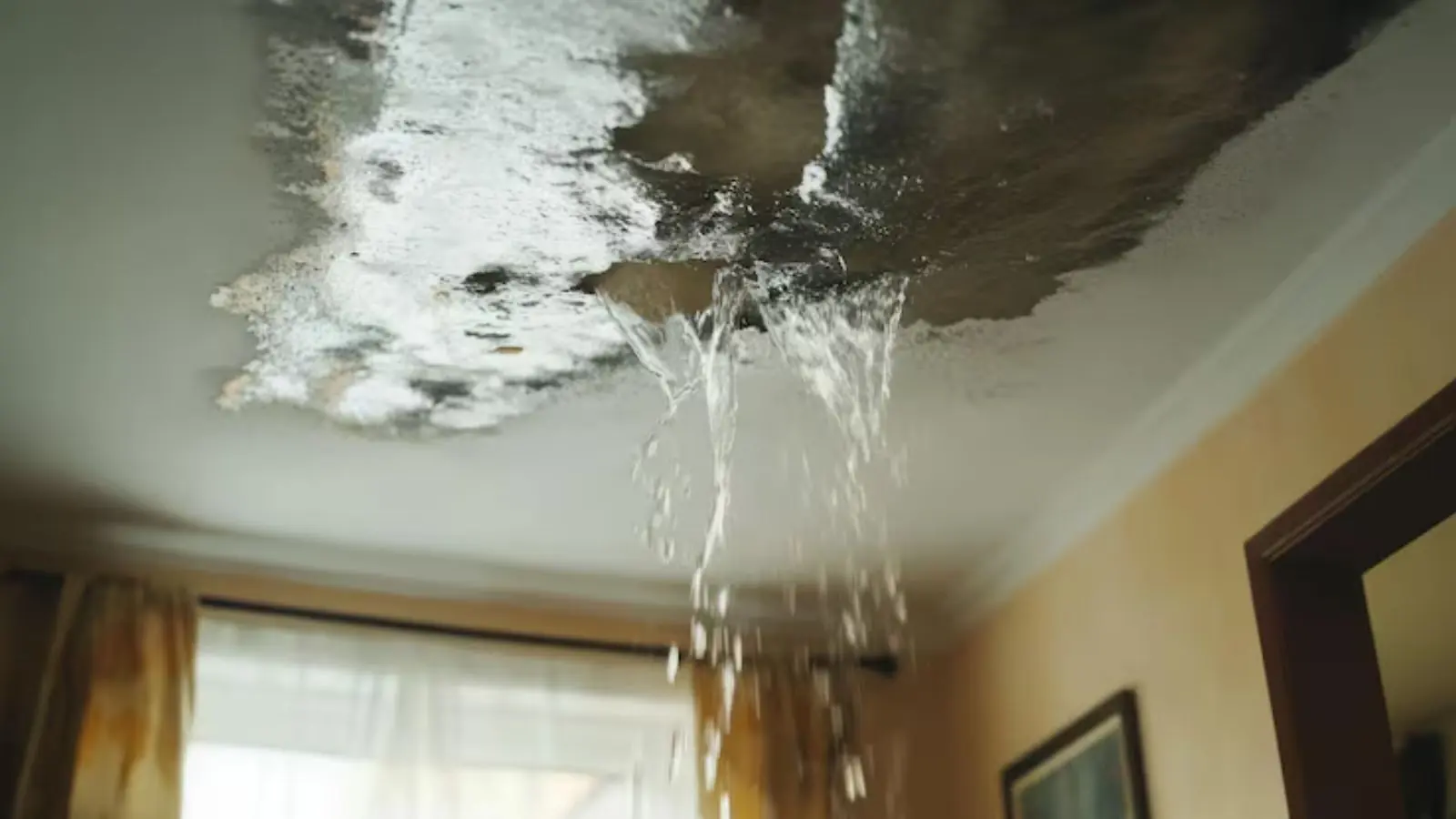
Match what you see to where the water came from
A wet ceiling almost always traces back to one of five places: the roof, an air conditioner, an upstairs bathroom or laundry, a water heater, or a pipe in the attic. The weather, the room above and the shape of the stain usually point to the right one. Use this table, then confirm by looking above the stain.
| What you notice | Likely source | First move |
|---|---|---|
| Stain or drip after rain, near an exterior wall | Roof, flashing or a vent boot | Catch the water and photograph it. Call a roofer once it is dry. |
| Damp spot on a hot day, near a hallway or return, no rain | AC drain, condensate line or overflow pan | Switch the AC off at the thermostat, then check the drain. |
| Ceiling under a bathroom, laundry or kitchen | Supply line, toilet seal, tub or drain | Close that fixture's shutoff valve, or the main valve. |
| Wet ceiling near a water heater closet or attic unit | Tank, relief valve or drain pan | Shut off the heater's water supply and power. |
| Stains spreading across several rooms, no storm | Supply line in the attic or wall | Shut off the main water valve and call a plumber. |
Confirming the source from above
Once the immediate danger is handled, look above the stain. In the attic, follow the wet insulation to its darkest, coldest patch and look up at the roof deck for daylight, stained sheathing or rusty nail tips. A flashlight and a dry afternoon are enough for a first look.
For an upstairs bathroom, run each fixture one at a time while someone watches the ceiling below. The sink, the shower and the toilet each leak on their own schedule, and a supply-line drip often only shows under pressure. A moisture meter on the ceiling confirms which spot is still wet.
For an air conditioner, check the condensate drain line and the pan under the unit. Slime or a standing pool in the pan means the line is blocked. Photograph what you find, since a plumber or roofer will want to see it.
Water still spreading? The emergency line is open 24 hours a day.
Call (760) 769-1159Your first hour with a wet ceiling
Stop the source if you can reach it: a fixture shutoff, the water heater supply, the AC at the thermostat or the main valve. Then protect what sits below, and slow down around anything electrical. The first hour decides how much has to be thrown away.
- Move furniture, electronics, rugs and paperwork out from under the wet area
- Set a bucket under each drip and lay towels or plastic sheeting around it
- Take dated photos and a short video of the stain, its edges and the contents
- Keep children and pets out of the room until you know the ceiling is stable
Stay out of an attic with wet insulation unless you can see exactly where the joists are. A foot placed on wet ceiling board goes straight through.
Electrical safety and relieving a bulging ceiling
Water dripping through a light fixture, fan or outlet is an electrical hazard. Stay out of any water that touches outlets or the panel. Switch off the circuit for a wet light fixture from the panel, but only when the floor around the panel is dry.
If you smell burning, see sparks or cannot reach the panel safely, call Southern California Edison or 911 first. Call a restoration line after the electrical risk is handled, not before.
Relieving a bulging ceiling safely
A ceiling that bulges downward is holding water and can drop without warning. Relieve it only when no light fixture, fan or wiring sits in or near the wet area and nobody is under it. Put a bucket or tub below the lowest point, stand to the side, and poke one small hole with a screwdriver so the water drains in a controlled stream.
One small hole beats a whole panel collapsing across the room. If the bulge is large, runs across a fixture or you cannot tell what is above it, keep everyone out and call for help instead.
When a wet ceiling is an emergency
Treat it as an emergency when water is still flowing, the ceiling is sagging, lights or outlets are wet, the water came from a toilet or drain, or insulation and carpet are soaked. That is the situation emergency water removal exists for. A slow stain from last month can wait for a daytime call, but a drip at midnight cannot.
We run a 24/7 emergency line with same-day response when available. Tell the dispatcher where the water entered, whether power is off and how large the wet area is.
After the leak stops, drying comes before repair
Fixing the source is only half the job. Insulation, drywall and framing stay wet long after the dripping stops, and the first 24 to 72 hours are when mold gets the moisture it needs. A crew uses a moisture meter and thermal camera to find the extent, then sets air movers and dehumidifiers. That is the work of water mitigation.
Rebuilding comes afterward. Photograph everything before it is removed, since coverage questions often turn on how the water arrived.
Cathedral City note: the roof leak that waits for a storm
Cathedral City averages only about 4.85 inches of rain a year, mostly in winter, so a small roof leak can sit unnoticed for months. Rachel's remnants soaked the valley on October 11, 2026 with more than an inch of rain in most places, exactly the kind of event that exposes cracked flashing or a worn seal.
After any big storm, walk through every room with a flashlight and look at ceilings and corners. A stain that was not there before points to the roof. Palm Desert recorded well over two inches that night, and owners in Palm Desert and Palm Springs should run the same check.
Frequently asked questions
Can a roof leak show up days after the rain?
Yes. Water travels along rafters and soaks into insulation before it reaches the drywall, so the stain can appear days later or only after the next rain.
Is it safe to poke a hole in a bulging ceiling?
Only when no fixture or wiring is in the wet area, nobody is below, and you can stand to the side with a bucket in place. Otherwise keep people out and call for help.
Can an air conditioner really cause ceiling water damage?
Yes. A clogged condensate line or a full overflow pan sends water into the ceiling below or around the unit. Air conditioners work hard through desert summers, which makes the drain a common culprit.
After a Cathedral City storm, do I call a roofer or a restoration company?
Both, in order. A roofer finds and fixes the opening, and a restoration crew dries the wet insulation, drywall and framing. Call restoration first if water is still coming in.