
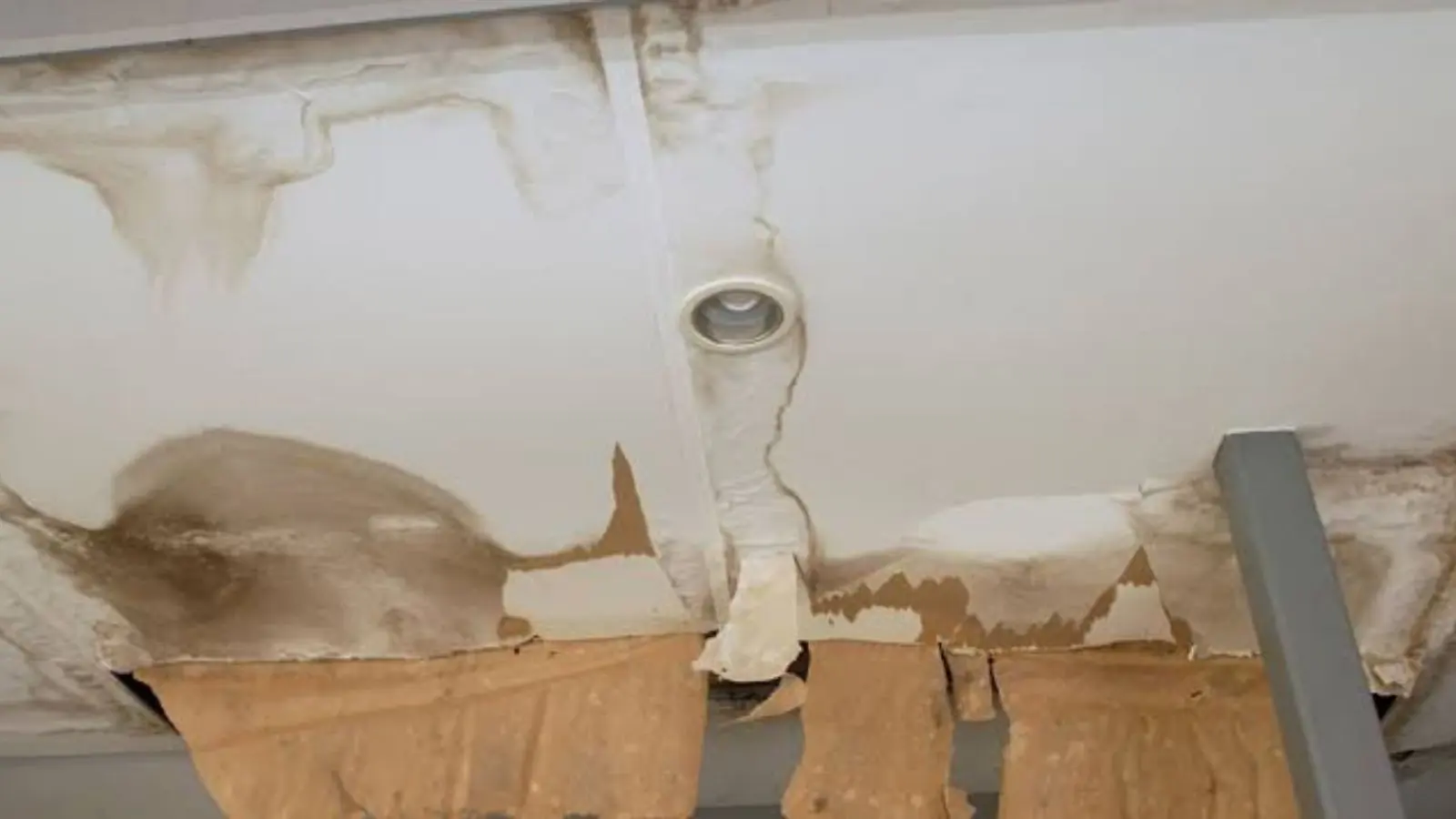
Prove the ceiling is dry before anyone repairs it
Once the leak is fixed, the repair order is simple: confirm the ceiling is dry, cut out anything sagging or soft, replace wet insulation, seal with stain-blocking primer, match the texture, then paint. Skipping the first step is why so many patches fail. Paint over damp drywall bubbles, and the stain comes back within weeks.
A ceiling that looks dry can still be wet above the surface. Press a pin-type moisture meter against the drywall every foot or so, and compare the numbers with a dry ceiling in another room of the same house. A thermal camera shows cool, damp patches, but it points to where to measure and does not replace the meter.
Write the readings on a sketch of the ceiling with the date. Retest the same spots a day or two later. Numbers that fall and then level out near your dry reference mean you can start cutting. Numbers that rise again mean water is still arriving from somewhere.
If the readings stay high after several days, the cavity above is still holding water. That is a drying job before it is a patching job, and our water mitigation crews handle it with air movers and dehumidifiers before any rebuilding starts.
What each ceiling symptom means and how to repair it
| What you see | What it usually means | Repair |
|---|---|---|
| Brown stain or ring, no sag | Water came through once or slowly and has dried | Test, seal with stain-blocking primer, repaint. Cut out only if the board is soft. |
| Sag or belly in the drywall | Board soaked and lost strength, often with water pooled above | Relieve safely, then cut out and replace the section. Do not just screw it back up. |
| Bubbles or peeling paint | Moisture trapped behind paint or joint compound | Scrape, let dry, retest, skim coat, prime. Replace if the paper face crumbles. |
| Active drip | Source still leaking or the cavity is still draining | Stop the source first. No repair until it is dry. |
| Dark spots with a musty smell | Long-term dampness above the ceiling | Pause before cutting and have the area assessed. |
Stains alone fool people. A stain that is hard, dry and the same color in the morning and evening is usually safe to prime. One that feels cool, soft or looks darker on humid days still has moisture behind it.
Water still spreading? The emergency line is open 24 hours a day.
Call (760) 769-1159Cutting out damaged drywall and wet insulation
Mark a square or rectangle around the damage that reaches the nearest ceiling joist on two sides, so the new piece has wood to screw into. Score the paper with a utility knife, then cut the board out with a drywall saw. Wear a dust mask and eye protection, because wet board and old texture throw off fine dust.
Before you cut, shut off power to any ceiling light or fan in the work area at the panel, and check the wires in the opening. Drywall dust also settles everywhere, so seal the doorway with plastic sheeting and run a box fan in a window blowing outward.
Look at the insulation you uncover. Batts that stayed wet lose their value and hold moisture against the board, so bag them and replace them. Meter the joists and the back of the neighboring drywall, and let exposed framing dry before you close it.
Cut a new piece the same thickness, screw it to the joists, tape the seams and apply joint compound in thin coats. Three thin coats with light sanding between them beat one thick coat that cracks as it shrinks. This stage is the heart of water damage repair on a ceiling.
Primer, texture and paint: the finish that hides the patch
Prime the patch and the whole stain with a stain-blocking primer. Oil-based or shellac-based products hold back stubborn brown rings, and a good water-based blocking primer handles lighter ones. Plain wall paint alone lets the ring ghost back through. Let the primer cure, check for bleed-through, and prime again if you see any.
Match the texture before you paint. Knockdown and orange peel are common ceiling finishes, and each can be sprayed or stippled onto the patch. Practice on cardboard first, work in the same direction as the old texture, and feather the edges wide so there is no visible outline.
Paint last, with flat ceiling paint, and cover the full ceiling plane from wall to wall rather than just the spot. Fresh white beside aged white shows up in the raking light from a window.
Give the finish a day under normal light before you judge it. Flaws that vanish under the ladder lamp often appear at dusk, and a small touch-up then is far easier than repainting the room.
When the job is bigger than a patch
Call a professional if the wet area is bigger than a few square feet, if insulation is soaked across a wide area, or if the water came from a toilet, drain or sewer line. A musty smell or dark growth on the board means the area needs mold remediation review before new drywall goes up.
We can map how far the moisture spread, explain the scope and price before work starts, and rebuild once the readings are normal. If you plan an insurance claim, photograph the ceiling before you cut. Coverage usually turns on whether the water was sudden or gradual, so check your policy. The same sequence applies to homes in Rancho Mirage and across the valley.
Cathedral City note: permits and paint in July heat
Ask the city building department if your ceiling repair needs a permit. The Building and Safety Division at 68700 Avenida Lalo Guerrero issues building permits and performs inspections, so describe exactly what you plan to replace, and whether any wiring or fixtures are involved, before you buy materials.
The mean July daily high here is about 107.6 F. As general trade knowledge, joint compound and paint dry too fast in that heat, so compound cracks and paint lap-marks. Work early in the morning, keep direct sun off the ceiling, and give every coat its full cure time. Owners in Palm Springs face the same limit.
Frequently asked questions
How long should a ceiling dry before I patch it?
There is no fixed number of days. Dry means the meter readings match an unaffected ceiling in the same house and stay level over a couple of days. If the numbers keep dropping, wait. If they plateau high, the cavity above is still wet.
Can I just paint over a ceiling stain?
Only if the area is dry and hard, and only after a stain-blocking primer. Ordinary paint lets the brown ring bleed back through. If the board is soft, bubbled or cool to the touch, cut it out instead.
Do I have to replace a sagging ceiling?
Usually the sagging section, yes. Wet drywall loses strength and rarely returns to flat. Keep people out from under it, and replace only the damaged piece if the surrounding board tests dry.
Who do I ask about a repair permit in Cathedral City?
Contact the city's Building and Safety Division and ask if your specific repair needs a permit. Bring a short description of the work, the room, and if you are touching wiring or fixtures.