
The plan in five steps
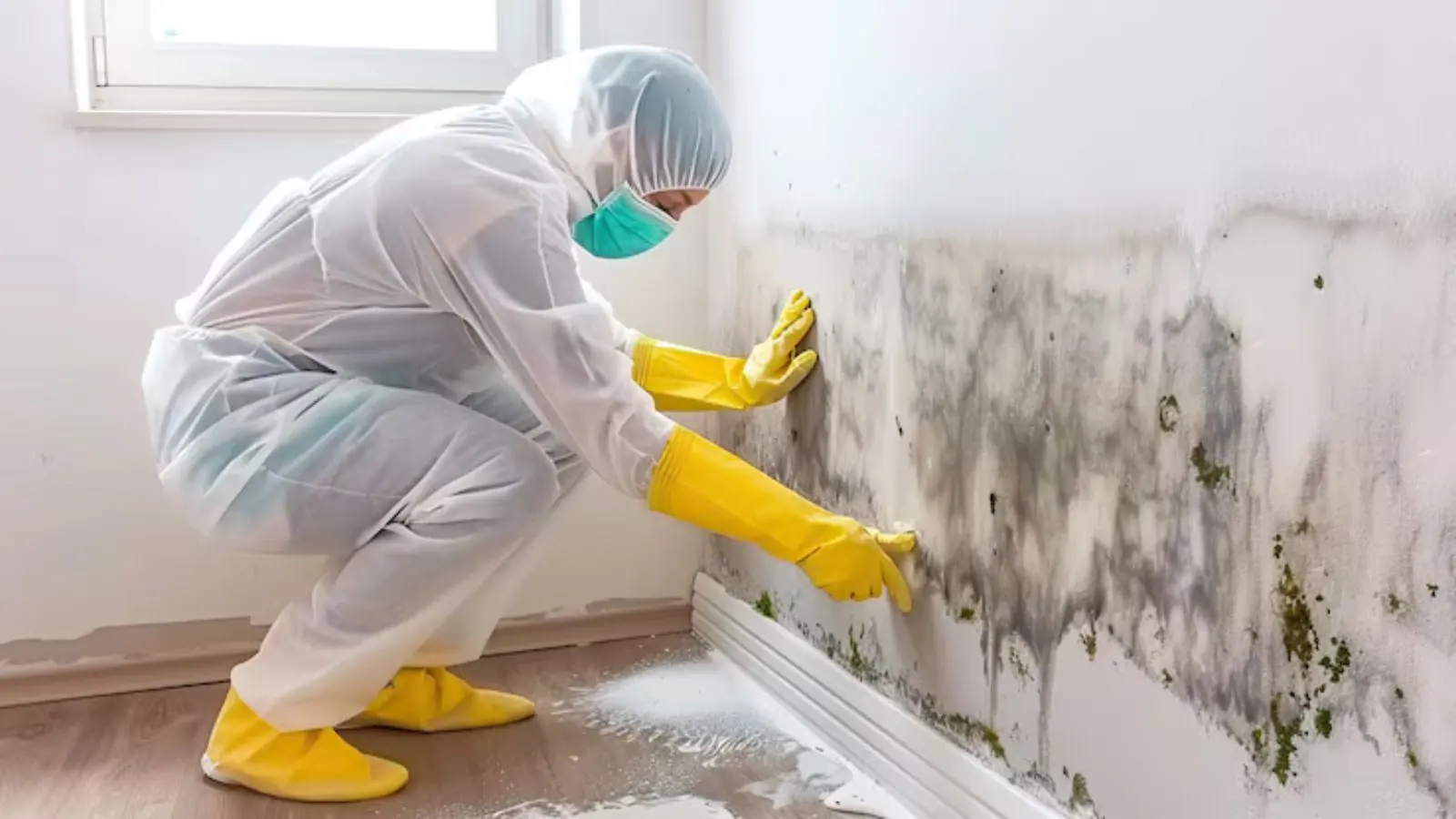
Mold in a house is a moisture problem with a growth symptom. The order that works is find the moisture, fix it, dry the area, remove what is affected, and then confirm the result. Skipping the first two is the reason mold shows up again after a cleanup.
This page treats the house as a whole, because mold in one closet often has a sibling in a bathroom or a ceiling. If you want help with a single stain, start with the spot, but if you have found two or three, walk the whole house with the checklist below.
Find the moisture: meter first, nose second
A musty odor tells you to look, but it cannot tell you where. A moisture meter can. A pinless meter scans drywall and wood for dampness, a pin meter reads framing and trim, and a thermal camera shows cool, wet patches behind paint. Take readings on a dry wall of the same house first, so you know what normal looks like.
Check the corners people skip: behind the washer, under the water heater, around attic hatches and along the lowest foot of exterior walls. Take notes as you go. Write down the room, the spot, the reading and the date. These notes become the baseline for your repair and any insurance or sale paperwork later, and they show whether numbers fall after the fix.
Water still spreading? The emergency line is open 24 hours a day.
Call (760) 769-1159Room-by-room checklist
Use this table as a walk-through. Each row names a place that holds moisture and what to look for.
| Place | What to check | Sign of trouble |
|---|---|---|
| Closets on exterior walls | Back wall, baseboard and the floor corner | Damp drywall, musty smell, stains near the floor |
| Bathrooms | Fan duct, caulk, ceiling and the wall behind the toilet | Peeling paint, soft board, a fan that vents into the attic |
| Window sills | Corners, sill trim and the wall below | Dark lines, bubbling paint, condensation pooling |
| AC closet or attic unit | Drain pan, condensate line and float switch | Water in the pan, stains on nearby ceiling |
| Under sinks | Supply lines, drain trap and cabinet floor | Warped cabinet base, drips, a damp pad |
| Roof and ceilings under it | Attic decking, ceiling stains, flashing | Dark insulation, rings on the ceiling after rain |
| Water heater and laundry | Pan, valves and hoses | Rust at fittings, wet flooring |
If you find damp drywall, ceiling stains or insulation that stayed wet, our water mitigation page explains how drying starts. Water sources that are still active come first, since mold treatment cannot outpace a running leak.
Fix, dry, remove, clear: why the order matters
Fix means the source is stopped: a repaired supply line, a cleared condensate drain, a patched roof, a working bath fan vented outside. Dry means air movers and dehumidifiers run until the meter readings match your dry reference. Only then do you remove affected materials.
Removal in a larger area follows ANSI/IICRC S520 practice: plastic containment, negative air with HEPA filtration, careful removal of drywall or insulation, and cleaning of the framing. Ask any company if its crews work to S520 and if your state licenses mold work. Our mold remediation page walks through what an assessment involves.
Clear means you confirm the result. That can be a final moisture check and visual inspection, and independent clearance testing is a separate step some buyers or lenders ask about. Questions about anyone's health belong to a physician, and no one can promise mold will never return.
Watch humidity with an inexpensive hygrometer
A small hygrometer costs little and shows indoor humidity at a glance. Put one in the closet or bathroom that concerns you and another in the main living area. Readings that climb for days are a reason to look for a source.
Run the bath fan during and after showers, keep furniture a few inches off exterior walls, and do not block a closet with stuffed boxes. These habits cut down moisture, but they do not replace repairs. If the hygrometer stays high after you fix a leak, ask someone to check the dehumidification and air flow in that room.
Document everything for insurance or a sale
Keep photos, meter readings, repair receipts, the scope of work and any clearance report in one folder. For an insurance claim, the California Department of Insurance advises you to report the damage, keep a log of all calls and letters, and make temporary repairs to prevent more damage. Photograph the room before and after each step. Policies often cover sudden and accidental water damage and often exclude gradual leaks, so check your policy.
If you plan to sell or refinance, documentation matters. Buyers and lenders sometimes ask for records and independent clearance testing, and nothing here promises what any of them will accept. Our water damage repair page covers rebuilding once the area is dry and cleared.
Cathedral City note: July AC, the October storm and lenders
Mean July highs in Cathedral City reach about 107.6 F, so AC systems run most of the summer. That heat makes condensate drain pans and lines a regular leak point, and closets that hold an air handler or sit against hot exterior walls deserve a check each season.
The October 2026 storm that dropped more than an inch of rain on most of the valley is the sort of event that sends water through a weak roof seam or window frame. Roof areas that were soaked can leak days later, so check the attic and the ceilings below it, and photograph anything damp with a date.
Documentation matters here when a lender or buyer asks about past moisture, so keep your meter log and repair records together. Neighbors in Palm Springs and Thousand Palms run the same checks, and we serve both.
Frequently asked questions
Can I get rid of mold in my house without a professional?
A small patch on a hard surface can be handled by a careful homeowner with the right gear. Anything on drywall, wood or insulation, anything that keeps returning, or anything larger than a small patch is better assessed by a crew that works to S520.
Does a musty smell mean I have mold?
It means moisture may be present, which is a reason to check with a meter. The smell alone does not tell you where it comes from or how large it is.
Should I run a dehumidifier?
It helps once the source is fixed. Running one in a room with an active leak only treats the air and not the cause.
What would a lender or buyer in Cathedral City want to see?
They sometimes ask for repair records, moisture readings and independent clearance testing. We cannot say what any particular lender will accept, so ask them what documents they want before work starts.