
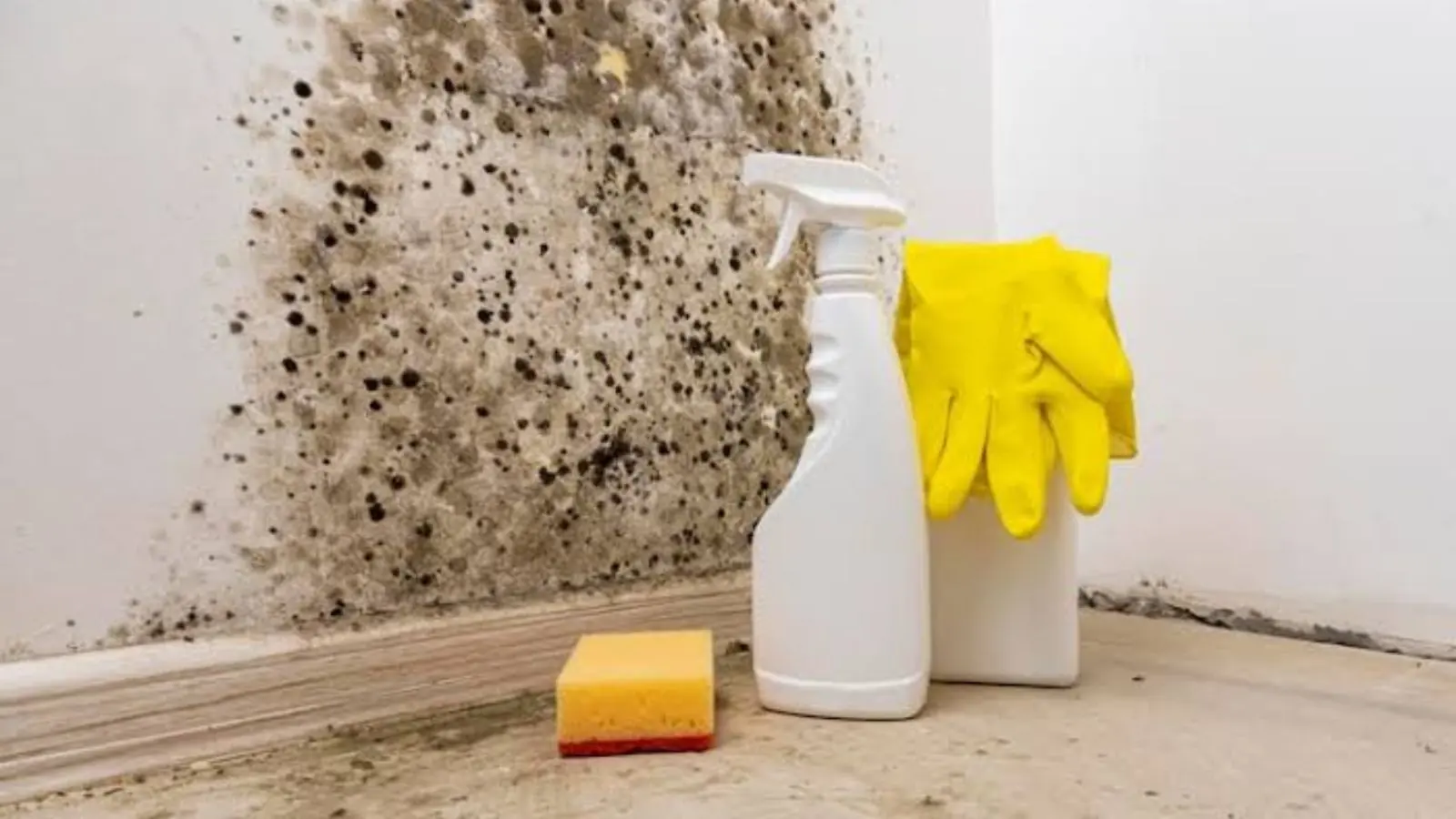
Killing is not the goal: removal and dryness are
Most searches for how to kill black mold expect a spray that ends the problem. In practice, a cleaner can treat the surface of a hard, smooth material, and that is about the limit. Mold grows where moisture lingers, so the real job is to fix the water, remove the growth and the material it has grown into, and dry everything.
Dead mold is still there. It stays on the surface and in the material until it is cleaned off or taken out. A surface that looks clean after a spray can still hold the material that grew it, so plan for removal, not a kill step, and recheck the spot after a few weeks.
What cleaners can do on hard, nonporous surfaces
On glass, glazed tile, a sealed tub or a metal fixture, growth sits on the surface. Scrubbing with detergent and water, then wiping with clean water, removes most of it. Some people follow with a disinfectant labeled for the job, and the label tells you the contact time and ventilation needs. Always follow the product label.
One safety rule overrides everything else: never mix bleach with ammonia. The combination releases a harmful gas, and bleach should not be combined with vinegar or other cleaners either. Pick one product, use it as directed, and rinse the surface before you try another. Keep a window open and a fan pointed outward so fumes leave the room, and keep children and pets out until you finish.
Water still spreading? The emergency line is open 24 hours a day.
Call (760) 769-1159Why drywall, wood and ceiling tile are different
Porous materials absorb water, and growth can reach below what you see. A spray lightens the surface while the roots stay in the paper face of drywall, the grain of wood or the fibers of ceiling tile. Wet cleaning also adds moisture to a material that needed to dry.
| Surface | DIY cleanup? | Why |
|---|---|---|
| Glass, glazed tile, sealed fixtures | Often, if the patch is small | Smooth surfaces hold growth only on top |
| Painted drywall | Not for more than a small, dry patch | Paper face and gypsum absorb moisture |
| Unfinished wood framing | Assessment first | Growth can reach into the grain |
| Ceiling tile, insulation, carpet and pad | Remove and replace | Fibers cannot be cleaned out |
| Anything that stays damp | Fix the water first | Cleaning a wet surface does not last |
When a material is porous and stained, the practical answer is usually removal. Crews cut out affected drywall, bag it, clean the framing and dry the cavity. Our mold remediation page explains how that fits with S520 practice.
A size limit for DIY, and the gear to use
A workable rule: handle it yourself only if it is a patch about the size of a sheet of paper or smaller, on a hard nonporous surface, in a spot that is now dry. If it covers more, sits on drywall or wood, or came back after cleaning, stop and get it assessed.
For a small cleanup, wear a properly fitted respirator rated for particles (an N95 at minimum), gloves and eye protection. Open a window. Use damp cloths, not a dry brush, so you do not stir the debris into the air. Bag the cloths and seal the bag before you take it out, and keep the AC fan off while you work so it does not move debris through the house.
If the growth returns within a few weeks, that is the signal to stop cleaning. It means moisture is still reaching the spot or the material holds it, and more spraying will not solve either.
Fix the water first, then call for the right help
Every mold cleanup fails the same way: the water source is left running. Look for a slow plumbing leak, a clogged AC condensate line, a roof leak or a bath fan that vents into the attic. Our water damage cleanup team handles wet materials after a leak, and fixing the source comes before any mold work.
Call for remediation when the area is larger than a small patch, when it sits in drywall, insulation or ceiling tile, when you smell a persistent musty odor with no visible source, or when a leak soaked the area for days.
A contained job uses plastic sheeting, negative air with HEPA filtration, and removal of affected material, followed by drying. Ask any company if its crews work to ANSI/IICRC S520 and if your state licenses mold work.
After removal, independent clearance testing is a separate step. Whether mold affects anyone's health is a question for your physician. We do not diagnose, and no contractor can promise mold will never return, because only dry conditions keep it away.
Cathedral City note: dry desert, wet interiors
Cathedral City averages only about 4.85 inches of rain a year, which makes people assume mold is not a local problem. The dry outdoors does not matter indoors. A leak under a sink, a clogged condensate line or a wet closet wall creates its own damp pocket regardless of the weather outside.
Mean July highs reach about 107.6 F, so AC systems run constantly and condensate drain pans and lines are a common leak point. Check the pan and line each spring, and look for staining around the air handler before the summer heat sets in.
Rain from the October 2026 storm, more than an inch in most of the valley, is a reminder that a damp wall after a downpour needs a moisture reading and not just a scrub. If water came in or a roof leaked, check walls, ceilings and closets over the next few weeks. Neighbors in Palm Desert and Rancho Mirage should look in the same places.
Frequently asked questions
Does bleach kill black mold?
On a hard, nonporous surface, bleach products can treat the surface when used as the label directs. They do not reach into drywall or wood, and they do nothing about the moisture. Never mix bleach with ammonia.
What about vinegar or other household cleaners?
Some people use vinegar, detergent or similar products on hard surfaces. The same limit applies: surface cleaning helps on smooth materials and not on porous ones. Do not combine products.
If mold is dead, can I leave it?
It is better to remove it. Dead growth remains on the material, and the stain usually draws attention. Cleaning or removing the material is the actual fix.
Can I paint or seal over it?
Not as a fix. Paint covers the surface but does not remove growth or dry the material, and moisture often pushes through again. Clean or remove, dry, and then repaint.
Our home got wet in the October 2026 storm. How soon should we have walls checked in Cathedral City?
As soon as you can, since the first 24 to 72 hours are the window that matters for drying. A moisture meter check of walls, baseboards and closets shows whether anything stayed wet, and a quick check often avoids a bigger job.