
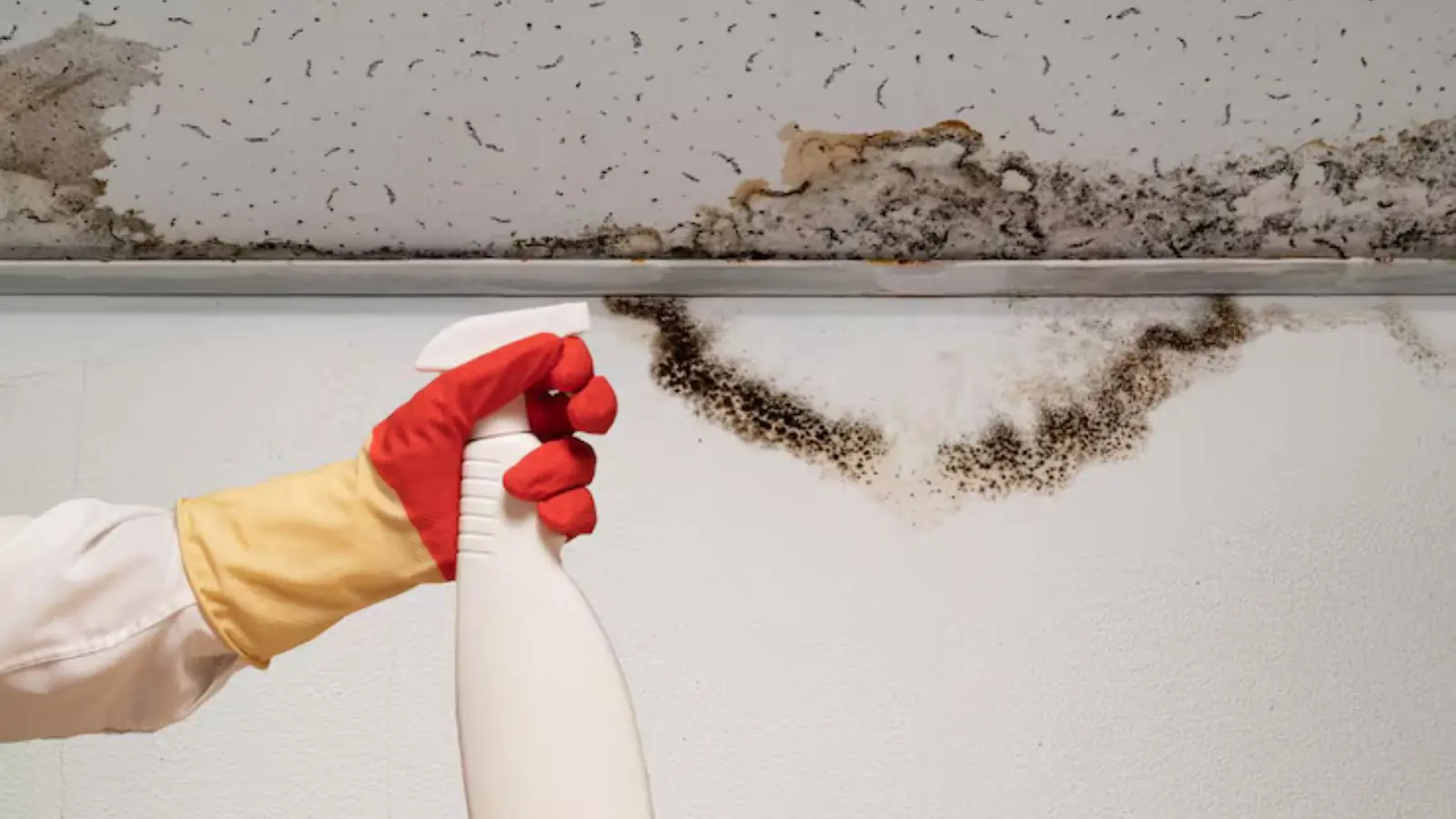
The short answer: the water is above or inside the ceiling
Mold on a ceiling almost always means moisture is reaching that ceiling from above or from inside it. The dark patch is a symptom. The source is the real problem, and until it is found and stopped, cleaning the surface only buys you a few weeks.
The usual suspects are a roof leak, an AC condensate line or drain pan, a bath fan that dumps steam into the attic, and plumbing in the floor above. Your task today is to work out which one is feeding the stain. The rest of this page goes through that in order, then shows when a stain stops being a household chore.
Trace the water: four places to look
Start with the pattern of the stain, because it often names the cause before you pick up a tool.
- Roof leak: stains that follow a roof line or sit near a vent pipe, often with a darker ring at the edge, and that grow after rain. Look in the attic for dark, damp decking and wet insulation.
- AC condensate: a stain near the air handler or under the attic unit. Check the drain pan for standing water and the PVC drain line for a clog or a loose joint.
- Bath fan and steam: a stain around the fan or above the shower. A flex duct that has slipped off the fan, or one that vents into the attic, lets warm moist air condense on cold surfaces.
- Upstairs plumbing: a stain below a bathroom, laundry or kitchen. Run the suspect fixture for a few minutes and watch the ceiling, or look at supply lines and the tub overflow.
A moisture meter settles the next question: is this ceiling wet now, or only stained from an old leak? A pinless meter slid across drywall shows damp areas that your eyes cannot, and a thermal camera shows cool patches behind paint. A dry reading with a stain still means a source existed once, so confirm it is fixed before you do anything cosmetic.
Water still spreading? The emergency line is open 24 hours a day.
Call (760) 769-1159What to do today
- Stop the water if you can. Close the fixture shut-off or the main valve for plumbing, switch off the AC if the pan is overflowing, and tarp or patch a roof opening only if you can do it safely from the ground or a stable ladder.
- Move furniture and belongings out from under the area, and put a bucket and plastic under any drip.
- Photograph the stain with a date, note when you first saw it, and keep a log of calls and messages. This helps with any claim.
- Dry the room once the source is stopped, using a dehumidifier and moving air.
- Leave the stain itself alone until you know the cause and the size.
If water is near a ceiling light, a fan or an outlet, stay out of it and do not touch the switch. If a light fixture in the stained area is wet, turn off its breaker from a dry spot and leave it off. Call Southern California Edison, The Gas Company or 911 for any electrical or gas risk before you call a restoration line.
If the ceiling is also bulging, our page on water mitigation explains how trapped water is released and dried safely.
What not to do
Do not scrub or scrape a dry stain. Dry scrubbing breaks the surface and sends debris through the room, and it leaves the wet drywall untouched. Do not spray it and paint over it either. Stain-blocking paint hides the evidence, the moisture stays trapped, and the paint blisters later, which sends you back to start.
A few more habits cause trouble. Do not stand under a bulging ceiling or poke it open yourself, because the water and wet insulation above can come down at once. Do not mix cleaning products, since bleach with ammonia makes a harmful gas. And do not replace drywall until the framing above it reads dry, or the new board will be stained within a season.
Small spot, spreading stain or sagging ceiling
Most calls fit one of three pictures. Use this table to decide your next move.
| What you see | What it usually means | Next step |
|---|---|---|
| Small isolated spot, dry to the touch, meter reads normal | An old or minor leak, or condensation near a cold spot | Find and fix the source, then clean or repaint. Stop and reassess if it returns. |
| Stain that grows, darkens or reappears after cleaning | Active moisture still reaching the ceiling | Stop the source, log readings, and have the area assessed before any cleanup. |
| Sagging, soft or bulging ceiling | Water and wet insulation trapped above the drywall | Keep out from under it, shut off the source, and call for same-day response. |
Once the ceiling is dry and the source is fixed, rebuilding is straightforward. Replacing sections of board, insulation and paint is the work covered under water damage repair.
When it becomes a containment job
A stain that keeps spreading, covers more than a small patch, or sits on drywall that stayed wet is a job for containment. Crews seal the room with plastic sheeting, run a HEPA air scrubber to hold the room under negative pressure, remove the affected drywall and insulation, dry the framing, and clean what remains. That sequence is what ANSI/IICRC S520 practice describes for mold work.
Ask any company if its crews work to S520, how it contains the room, and if your state licenses mold work. Independent clearance testing afterward is a separate step from the removal. Our mold remediation page explains the assessment in plain terms. Whether a ceiling stain matters for anyone's health is a question for a physician, not for a contractor or a web page.
Cathedral City note: bathroom and closet ceilings, July AC and storm roofs
Callers usually describe a bathroom ceiling or a closet ceiling. That fits the causes above, since bathrooms carry steam and fan ducts and a closet is a common place for an air handler. If your stain is in either spot, check the fan duct or the unit's drain pan first.
Mean July highs in Cathedral City reach about 107.6 F, so AC systems run hard through the summer and condensate lines and drain pans become a common leak source. Look at the pan and flush the line before next summer starts, not after a stain appears.
Most of the Coachella Valley saw more than an inch of rain from the storm of October 11, 2026, rain that can first show as a ceiling stain. A roof that took that water can show a stain days later as insulation soaks it up slowly. Walk the attic with a flashlight, photograph any damp decking, and note the date. Neighbors in Palm Springs and Rancho Mirage are dealing with the same question.
Frequently asked questions
Can I just paint over mold on a ceiling?
No. Paint hides the stain but leaves the moisture and the affected drywall in place, and the patch usually comes back through the paint. Find the water, dry the area, and have the material cleaned or removed first.
Should I test the ceiling before anything is removed?
Testing is one tool, not a requirement for every stain. A moisture meter and a visual look in the attic often tell you more about the cause. If a lender, buyer or insurer wants documentation, independent clearance testing after removal is the usual step.
If the stain is dry, is the problem over?
Not necessarily. A dry stain means the leak may have stopped, but you still need to confirm that the source is fixed and that the drywall and insulation above are dry.
I found a ceiling stain after the October 2026 storm. What should I do first in Cathedral City?
Photograph it, mark its edges with a pencil and a date, and look in the attic for damp decking or insulation. If the stain grows or the ceiling sags, stop the source if you can and call our 24/7 line for same-day response when available.