
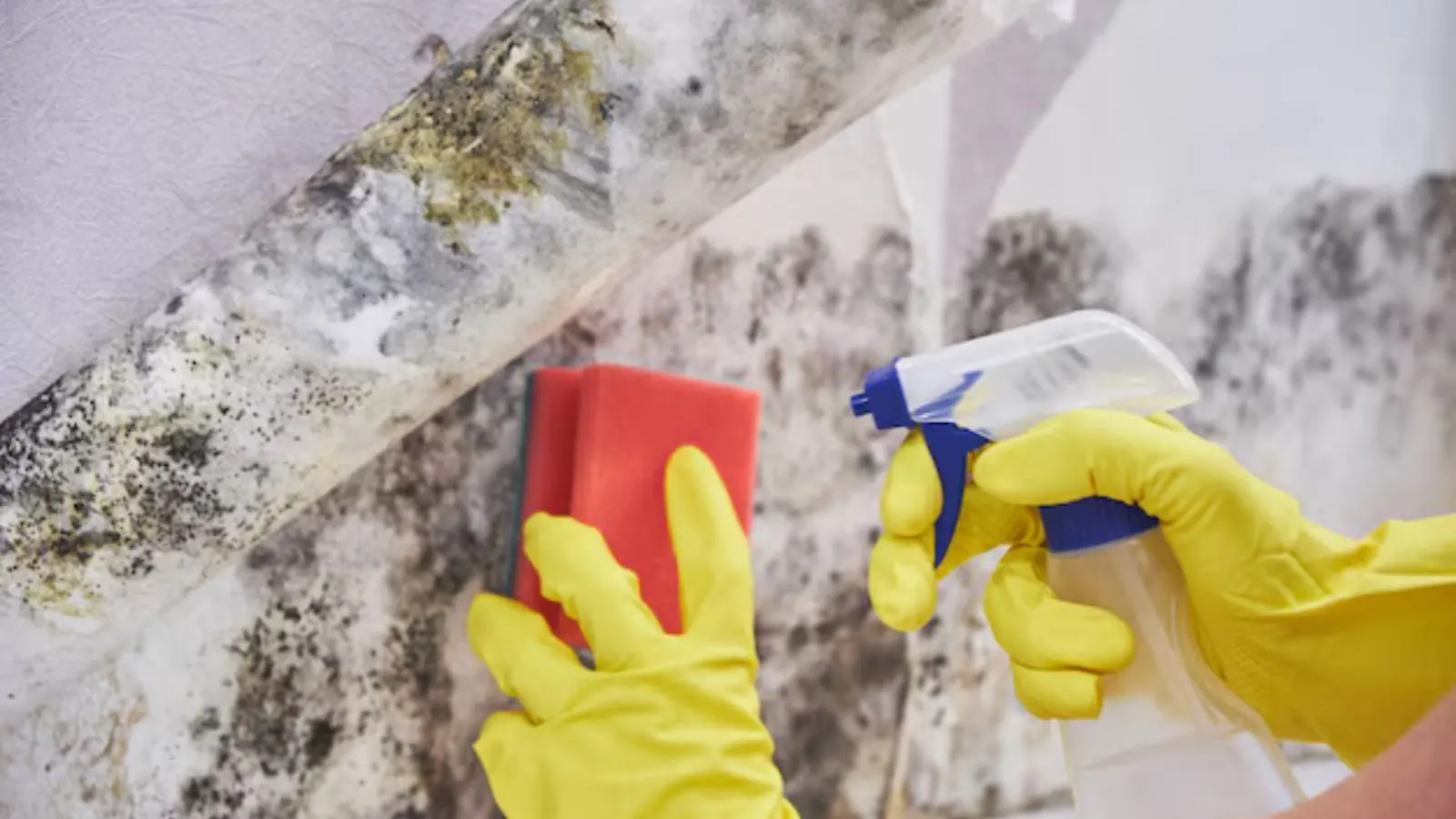
The short answer on mold products
A few products are genuinely useful for a small patch of surface mold on a hard, non-porous material like tile, glass or sealed metal. None of them fix the reason the mold grew. Mold needs moisture, so the leak, the damp closet or the clogged drain has to be dealt with first, or any product is just a temporary cosmetic.
Below we go through each product category you will see on a store shelf, what it does, and where it stops. We name no brands because the category matters more than the label, and the label on a bottle tells you less than the surface you are using it on.
Product types: good for, and limits
| Product type | Good for | Limits |
|---|---|---|
| Household cleaner and detergent | Wiping surface growth off tile, glass, sealed counters | Does little on drywall, wood or grout that has soaked up water |
| Mold-specific spray | Light surface growth on hard materials, label directions followed | Does not reach roots inside porous material and does not remove the cause |
| Stain-blocking primer | Hiding a clean, dry, already-treated stain | Never a fix for active mold and not a substitute for removal |
| Dehumidifier | Lowering room humidity so damp surfaces can dry | Cannot dry a wet wall cavity and fails in a closed closet |
| HEPA vacuum | Collecting fine dust after material is removed | Not a cleaner for wet mold and useless if the filter is not sealed |
| Respirator and gloves | Protecting the person doing the cleanup | Protect you only, they do not make a job safe to attempt |
| Moisture meter | Finding wet drywall and framing you cannot see | Gives readings, not a mold result, and needs a dry reference spot |
| Mold test kit | Showing that spores are present | Spores are normally in air, so it cannot say how much, where from or whether a job is done |
The pattern is simple. Products work on surfaces, and the real trouble with mold is almost always below the surface, in drywall paper, insulation, baseboards and the back of a cabinet.
Water still spreading? The emergency line is open 24 hours a day.
Call (760) 769-1159Cleaners and sprays: what they really do
Plain detergent and water, scrubbed with a cloth and followed by a dry wipe, handles a small patch on a hard surface. A mold-specific spray can help on the same kind of surface when you follow the label for contact time and ventilation. Never mix cleaning chemicals, and never spray and walk away from a porous surface that stays wet.
On drywall, ceiling tile, carpet pad or unsealed wood, spraying often just adds more water to a material that was already damp. The surface may look better for a week. Underneath, the paper facing and the framing may still be holding moisture, and that is what keeps the problem alive.
A good rule is that anything you would have to cut, pull or replace to get to the stain should not be treated with a spray. It should be assessed by someone who can find the extent of it.
Why painting over mold fails
Stain-blocking primers and mold-resistant paints are made for a surface that is already clean and dry. Roll them over active growth and you seal a damp, food-rich layer behind a film. The stain may stop bleeding through, but the moisture source and the material are unchanged.
Within weeks or months the film can blister, peel or discolor again, because water vapor is still moving through the wall. You have then hidden the evidence, made the next inspection harder, and possibly made a later disclosure conversation more awkward. Use primer last, after the material is dried, cleaned or replaced, never first.
Equipment worth owning, and gear for the person cleaning
A dehumidifier is the product most households can use well. Place it in the open, keep doors to the room ajar, and empty or drain it. It lowers humidity in a room, which helps surfaces dry, but it will not pull water out of a saturated wall on its own. That job belongs to air movers and LGR dehumidifiers on a drying plan.
A HEPA vacuum is for dust after the work, not a wet cleanup tool, and a vacuum with a worn seal can blow fine particles back into the room. A pin or pinless moisture meter is the quiet bargain here. Tap a few spots on a wall, compare them to a spot you know is dry, and you find out where the water went.
Gloves, eye protection and a fitted respirator protect the person scrubbing or cutting. Health questions about exposure belong with a physician. If a job needs more than basic protection, that is usually a sign it needs professional containment instead of a weekend attempt.
When products are the wrong tool
Skip the shelf and call a crew when the growth covers more than a small patch, returns after you cleaned it, sits on porous material, or follows a leak that wet drywall, insulation or flooring. Also call when you smell mustiness with no visible source, which often means a wet cavity.
A mold remediation crew contains the area, removes affected material under negative air with HEPA filtration, dries the structure, and works to ANSI/IICRC S520. Ask if your state licenses mold work, and ask any company if its crews follow S520. Our mold remediation page explains how an assessment works.
If the cause was a plumbing or roof leak, the wet material is a water job first. Our water damage cleanup work removes wet material before it becomes a mold problem.
Cathedral City note: closets, condensate lines and storm leaks
With a mean July high near 107.6 F, air conditioners in Cathedral City run for months, and the condensate line from the air handler is a common source of slow leaks. Many handlers sit in a hall closet or garage. If the closet door stays shut and a dehumidifier is running in there, the machine just recycles the same humid air, and the unit's drain pan may overflow behind it.
Tie-back: open the closet door, check the pan and the drain line, and set the dehumidifier in the room instead. If the baseboard behind the unit feels cool or soft, press a moisture meter against it before you reach for a spray.
More than an inch of rain fell on most of the valley during the October 2026 storm. A roof or window leak from that storm may have wetted a ceiling or wall edge you have not checked. Look at ceiling corners and the wall under windows, and photograph any stain first. Neighbors in Palm Springs and Rancho Mirage are checking the same things.
Frequently asked questions
Can bleach or vinegar kill mold on drywall?
Neither reaches the growth inside porous drywall, and added water can feed it. They are for hard surfaces only. If drywall is stained, soft or wet, plan to have it assessed and likely cut out.
Is a mold test kit worth buying?
A kit shows spores are present, which they are in ordinary air. It does not tell you how much, where it came from or whether a cleanup worked. Independent clearance testing after remediation is a separate service.
Should I run a dehumidifier after a small leak?
Yes, in an open room, along with fixing the leak and opening up wet cabinets or baseboards. A dehumidifier supports drying but cannot dry a saturated wall by itself.
Which product do Cathedral City homes with a closet AC unit need first?
A flashlight, a moisture meter and a clean drain line. Check the pan under the air handler and the condensate line before running any dehumidifier in that closet, and keep the door open while it works.