
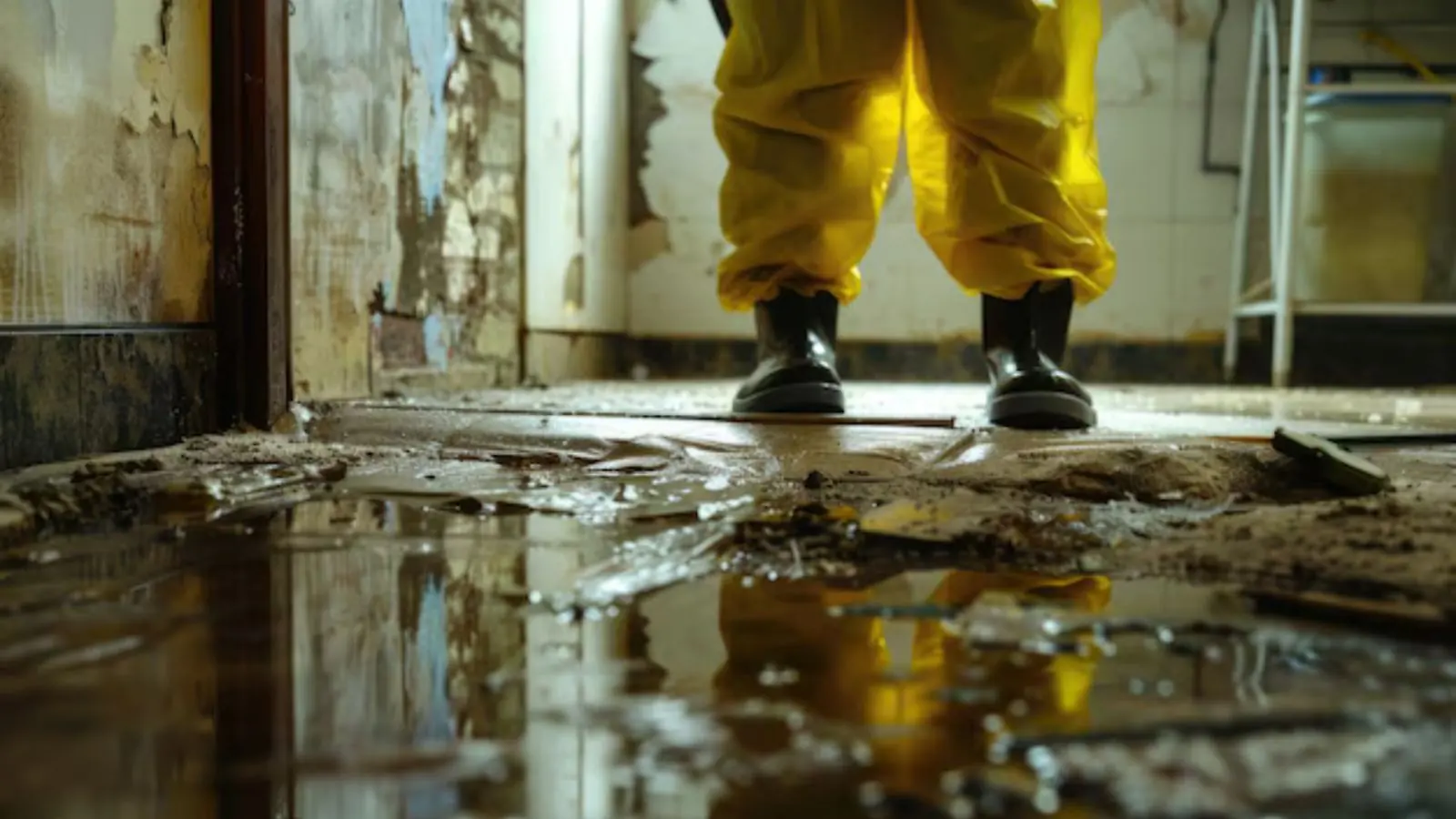
Why sewage water is category 3 and you stay out
Water from a backed-up toilet, tub or floor drain is category 3, sometimes called black water. It carries waste and bacteria, so it is treated as contaminated from the moment it appears, no matter how clear it looks. You should not wade through it, mop it up with household towels or let children and pets near it.
The contamination soaks into anything porous, including carpet, pad, drywall, insulation and cabinet toe kicks. Those materials cannot be cleaned to a safe level and have to be removed. Hard surfaces like tile and sealed concrete are cleaned and sanitized instead.
That is why a quick mop job fails. The visible puddle is the smaller part of the problem, because contaminated water also travels under baseboards and into wall bottoms where you cannot see it.
What to do in the first hour
- Stop using water. No flushing, no showers, no dishwasher or washing machine, because every drain in the house is feeding the same blockage.
- Keep people and pets out of the wet area, and close the door to it.
- Do not use household cleaners to rush a cleanup, and never mix chemicals.
- Open a window or two for fresh air if outdoor air is not blowing the smell through the house, and avoid running the central system through the affected area.
- Photograph the source, the water line on walls and the damaged belongings before anything is removed.
- Call the right provider for the line, then a restoration crew for the cleanup.
- If a toilet is overflowing and clean-looking water is still running, close the shut-off valve on the wall behind it. That stops fresh supply water but does not stop the sewage coming up from the drain.
Your home may have a blockage in its own line, a problem in the main line, or a full septic tank. Which provider you call depends on that, and the next section explains how to find out.
Water still spreading? The emergency line is open 24 hours a day.
Call (760) 769-1159Safety block: power and water together
- Stay out of any water that touches outlets, power strips or a panel.
- Skip the breaker box if getting to it means walking through sewage, and call the electric utility instead.
- Call Southern California Edison, The Gas Company or 911 for any electrical or gas risk before you call the restoration line.
- Wear boots, gloves and eye protection if you must enter briefly, and wash hands and boots afterward.
- Ask a physician any health questions about exposure.
Septic or sewer: how to tell which you have
Start with paperwork. A property on a municipal sewer usually pays a sewer charge on a utility bill, while a septic home does not. Closing documents, your property file or a past inspection report often say which system you have.
Then look at the yard. A septic system has a buried tank, often with a round or square lid or a riser near the house, and a leach field or drain area downhill. If you cannot tell, ask the city or your water provider which sewer service, if any, covers your address.
| Clue | Septic | Sewer |
|---|---|---|
| Bill | No sewer charge | Sewer charge on a bill |
| Yard | Tank lid or riser, leach field area | No tank, a cleanout cap near the house or street |
| Backup pattern | Slow drains everywhere, gurgling, soggy yard | Often one low fixture or the whole line from the street |
| Who to call | Septic pumper or septic service | Sewer provider or a plumber for the main line |
What a professional cleanup involves
After the source is stopped, standing sewage is extracted, then porous materials are cut out and bagged. Surfaces are cleaned, treated with an antimicrobial and dried with air movers and LGR dehumidifiers. Moisture readings are logged so you can show what was done.
A backup that reached drywall may need a flood cut above the wet line, and wet insulation comes out with it. Our flood damage restoration work includes sewage backup cleanup, and ANSI/IICRC S500 is the standard to ask any company about. If damp materials sit for days, mold can follow, and our mold remediation page explains the next step.
Insurance and documentation
Report the damage to your agent or company, keep a log of calls and messages, and make temporary repairs to prevent more damage. A policy may not cover ensuing damage if you do not take reasonable steps. Sewer backup is often a separate endorsement, so check your policy and ask your insurer.
Keep photos, drying logs and receipts for cleanup, hauling and any replaced materials, and save the plumber or septic company invoice that names the cause. Be wary of early offers presented as full settlements that ask you to release further claims.
Cathedral City note: know your system before a backup
Some Cathedral City neighborhoods, including Whispering Palms, South City, and Papaya and Pomegranate, are still on septic systems. In 2026 the city and Coachella Valley Water District asked residents for feedback on a possible septic-to-sewer project there. The city said it only moves forward if grant funding covers the full construction cost, and it is at the feedback stage.
Tie-back: do not assume. If you live in or near those areas, find your tank lid and pumping records now, rather than discovering the system during an emergency. If you are on septic, schedule routine pumping and keep the lid area clear of cars and landscaping.
Either way, keep wipes and grease out of the drain. We serve Palm Springs and Rancho Mirage too, and the same first-hour steps apply.
Frequently asked questions
Can I clean up a small sewage backup myself?
A small backup on a hard floor can be handled by someone with proper gloves, boots and eye protection, using a disinfectant as directed. Anything that reached carpet, drywall or cabinets needs professional removal.
Who do I call first, a plumber or a restoration crew?
Call the provider for the line first, a plumber, sewer provider or septic service, so the blockage is cleared. A restoration crew handles extraction and cleanup. Do both quickly, because contaminated materials should not sit.
Will my homeowners insurance cover a sewage backup?
It depends on your policy, and backups are often covered only with an added endorsement. Check your policy and ask your insurer before you decide what to throw away.
I live in a Cathedral City neighborhood that may still be on septic. How do I check?
Look for a tank lid or riser, check your closing papers and bills for a sewer charge, and ask the city. Whispering Palms, South City, and Papaya and Pomegranate were named in the 2026 septic-to-sewer feedback effort, so start there if you live in them.